
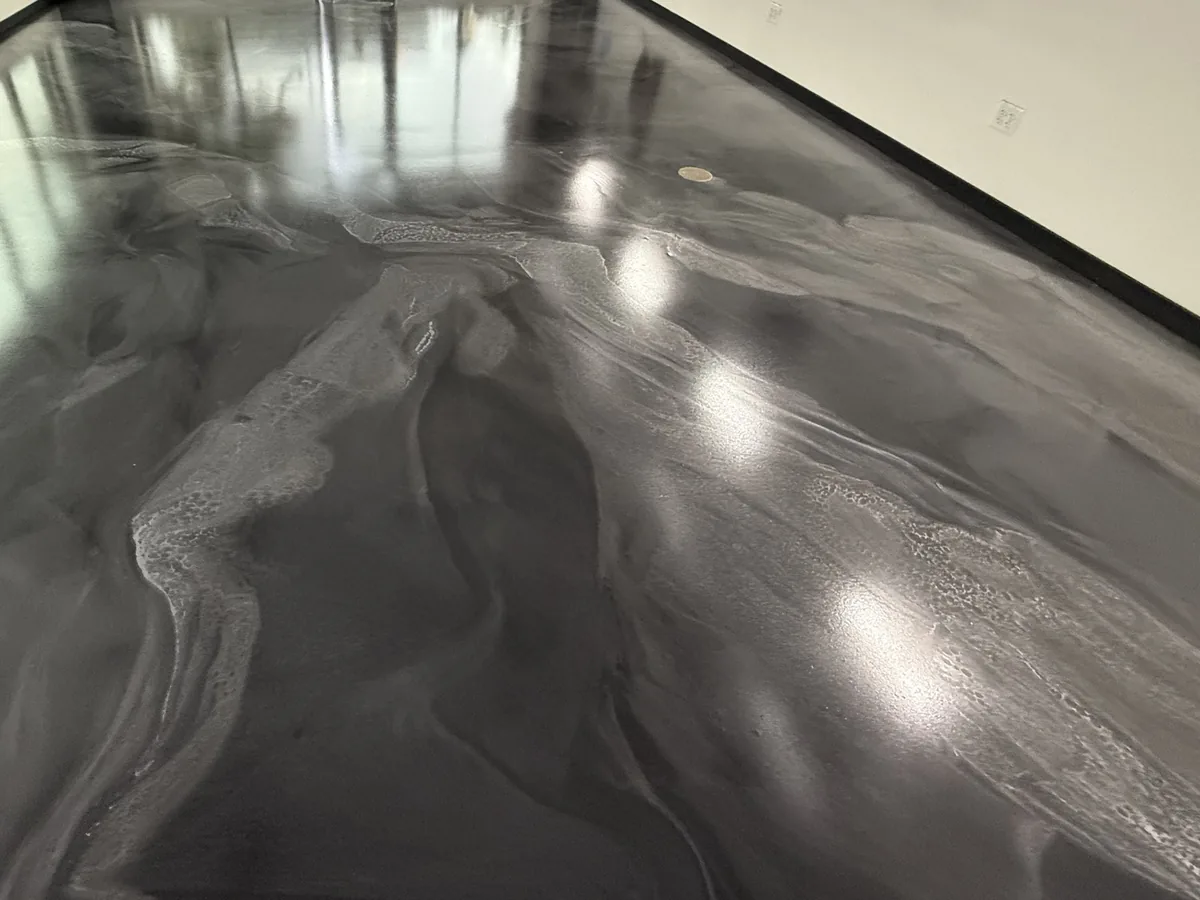
Epoxy vs Polished Concrete: Which Floor Should You Choose in Minnesota?
Neither floor wins on every count, so choose by the room and the slab. Polished concrete fits a sound slab when you like the look of concrete itself. An epoxy floor coating fits floors that need color, grip or chemical resistance. It also covers a stained or patched slab.
Slab Lab Coatings does both. We grind and polish concrete, and we install epoxy floor coatings over a diamond-ground slab. In a Minnesota garage, our full-flake polyaspartic system over an epoxy base coat is a third option.
What is the difference between epoxy and polished concrete?
Polished concrete is your own slab, ground and hardened into the finished floor. Diamond tooling grinds it in stages before it is densified and polished. A national cost guide says true polished concrete needs no sealer, because densifying hardens the surface.
An epoxy floor coating is a resin and a hardener that cure into a layer that bonds to the slab. That bond needs grip, so the slab is diamond ground first.
How do epoxy and polished concrete compare?
Each floor leads on different points, so match it to the room.
| Factor | Polished concrete | Epoxy coating |
|---|---|---|
| Look | The concrete itself, from matte to high gloss | Solid color, flake, metallic or quartz |
| Stains, cracks and patches | Stay visible after polishing | A full flake broadcast can soften surface flaws |
| Wet floors | Slippery when wet; a textured finish helps | Can get slippery when wet; flake or quartz adds grip |
| Oil and chemicals | Oil, grease and acids can stain it | Resists stains and chemicals; varies by product |
| Hot tires | No film for a hot tire to lift | The topcoat has to resist hot-tire pickup |
| Damp slab | No film to blister; white mineral salts can form | Moisture can blister the coating or break its bond |
| Upkeep | Dust mop or wet mop; reseal every 3 to 5 years if sealed | Dust mop; the topcoat wears and gets recoated |
Which one hides stains, cracks and patches?
An epoxy floor coating hides more, because polishing refines the slab instead of covering it. A flooring company’s guide says cracks, patches and mismatched pours stay visible after polishing.
Polished concrete looks like the slab itself, with more stone exposed as grinding goes deeper. The gloss level sets how reflective it looks, up to a mirror-like shine.
A coating gives the slab a new face in more colors, as a home-improvement guide notes. A full flake broadcast can also soften surface flaws, and we offer two dozen flake color blends. Cracks still get repaired first, since a coating is no fix for structural problems.
Which one is less slippery when wet?
Both get slick when wet, so the finish matters more than the product. A home-improvement guide says polished concrete is slippery, especially when wet. It suggests a non-slip sealer or a textured finish.
A national cost guide says epoxy can get slippery when wet too, though less than polished concrete. Our flake systems are scraped for a consistent texture and grip. For commercial floors, quartz and textured topcoats add more slip resistance.
Which one stands up to oil, chemicals and hot tires?
A coating takes the hit on top, while spills land on polished concrete itself. A home-improvement guide warns that oil, grease and acidic liquids can stain polished concrete. A national cost guide says a stain-guard sealer helps there, while coatings protect concrete from stains, chemicals and wear.
Hot tires can soften a weak coating and lift it, which is called hot-tire pickup. A flooring company’s guide calls that a coating problem, since polished concrete has no film to lift. A polyaspartic topcoat stays rigid under heat, and our garage systems finish with one. Our guide to epoxy, polyaspartic and polyurea covers the chemistry.
What do road salt and snowmelt do to each floor?
Salt is hard on bare concrete. A national concrete industry group says cars leave salt on garage slabs. Deicers raise moisture at the surface and add freeze-thaw cycles, which can flake the top of a slab.
A pitted or salt-damaged garage slab needs concrete repair first, whichever floor you pick. On a polished floor, those patches stay in view. A coating covers the repaired slab and protects its surface. Our systems are chosen for Minnesota salt, snowmelt and freeze-thaw cycles.
What happens when the slab is damp?
Moisture can cause trouble under both floors, so test the slab before you choose. University of Minnesota Extension explains that vapor can move from the wetter ground through basement concrete.
Under a coating, moisture can break the bond or push up blisters, a flooring company’s guide explains. Polished concrete has no film to blister, but moisture can leave white mineral salts on its surface.
The safe moisture level depends on the product, so no single number fits every floor. Every basement slab we coat is ground and tested, and moisture issues are addressed first. Our basement floor moisture guide covers the testing.
How much upkeep does each floor need?
Both are easy to clean, but they age differently. A national cost guide says polished concrete needs only dusting or wet mopping. A flooring company’s guide adds periodic burnishing to bring back the shine in traffic lanes. If you seal it, a home-improvement guide says resealing every 3 to 5 years is usually enough.
An epoxy floor coating needs a regular dust mop, and mats at the doors help in a garage. Its topcoat is a wear layer, meant to be recoated before it wears through. A damaged spot on a coating can sometimes be patched, while polished concrete usually needs that area re-honed.
Which one fits a garage, a basement or a commercial floor?
In a garage, hot tires, oil and road salt all land on the floor. Polished concrete avoids hot-tire pickup, but it shows patches and can stain from oil. Our full-flake garage floor coating is the third option, with an epoxy or polyaspartic base coat and a polyaspartic topcoat. Most garages are coated in one day.
In a basement, moisture decides first, then the look you want. Polished concrete suits a sound slab with few patches, while a coating covers a patched one or adds color. Our basement floor coatings include both.
On a commercial floor, forklift traffic, chemicals and slip resistance decide. One commercial coatings guide says polished concrete is often the right answer for warehouses, offices and large stores. Where chemicals, color or slip texture matter, the same guide points to epoxy.
Minnesota’s food code calls for nonabsorbent floors in areas subject to moisture, such as food prep areas. It prohibits sealed concrete there, which points those rooms toward a nonabsorbent coating. For business owners and property managers, we plan the work around your operation. Compare our commercial floor coatings with our polished concrete floors.
Does epoxy or polished concrete cost more?
Neither one is always lower, because the market ranges overlap. A home-improvement guide lists polished concrete at $3 to $15 per square foot. A national cost guide lists epoxy flooring at $4 to $10 per square foot, installed. These are market numbers, not our price list.
Floor size, slab condition and the finish move both prices. For the detail, read our polished concrete cost guide. Business owners can check commercial epoxy flooring cost per square foot. For garages, see what garage floor coatings cost in Minnesota.
How do you choose the right floor for your slab?
Start with a close look at the slab. Slab Lab Coatings was founded by a former coating inspector, and our prep follows the standards an inspector checks for. Since we offer both floors, your free on-site estimate can compare them.
Your estimate spells out the system, the finish and the repairs for your floor. We work across the Twin Cities metro from our Otsego base. See our epoxy floor coating systems, then call or text (612) 702-9724.