Garage floor coatings for Andover's large lots and pole buildings
Andover's first suburban homes went up in the 1960s on the west side, on private wells and septic systems. City sewer reached the south end in 1976, and new subdivisions kept coming through the 1990s. Much of the rest is rural, where a new lot needs at least 2.5 acres and 300 feet of width.
The city code lets accessory buildings grow with the lot. On 1 to 5 acres, detached buildings can add up to the footprint of the house. On 5 acres and up, setbacks and lot coverage set the limit. The city's building handout also allows post-and-beam pole buildings with posts set to frost depth.
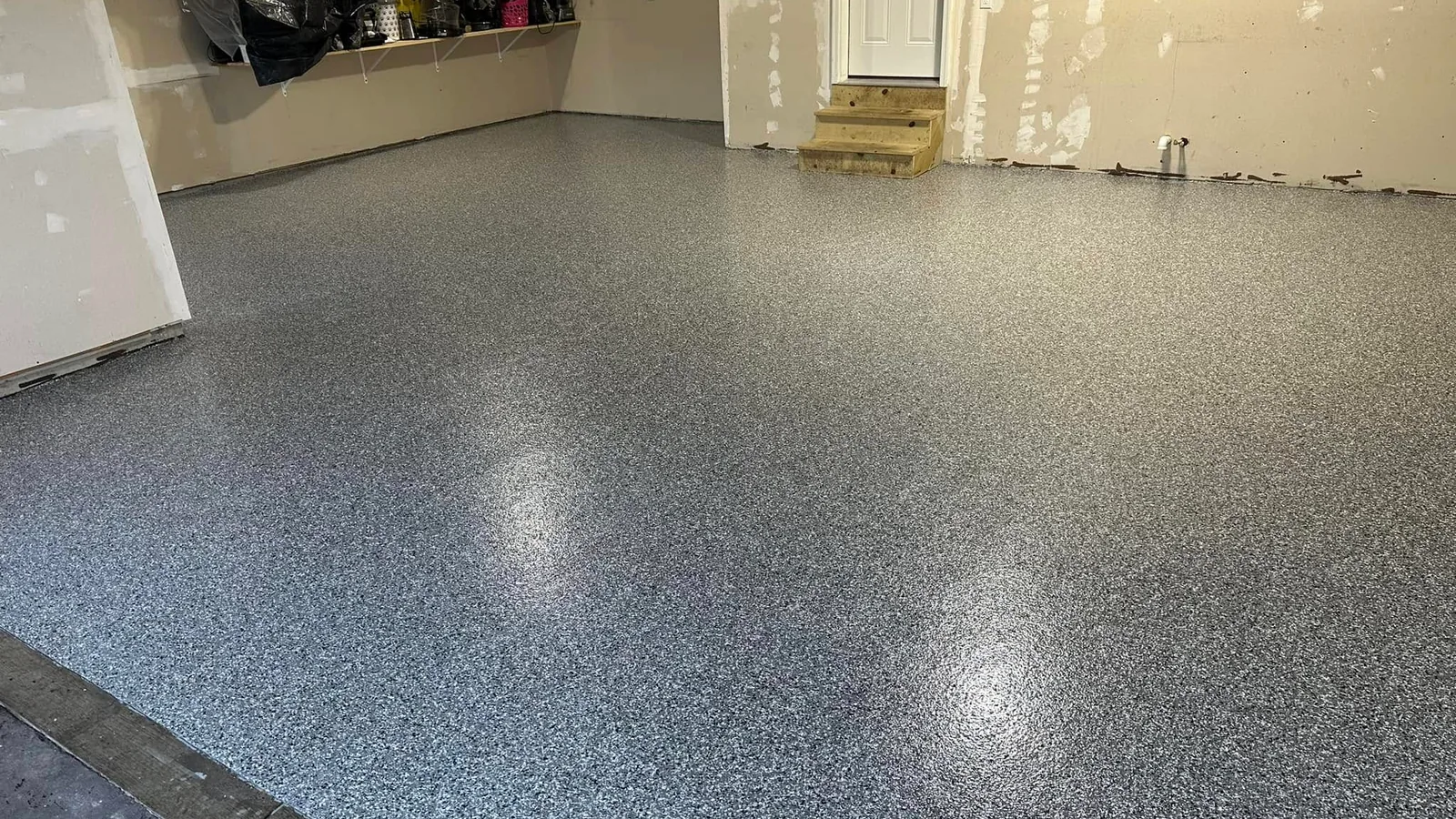
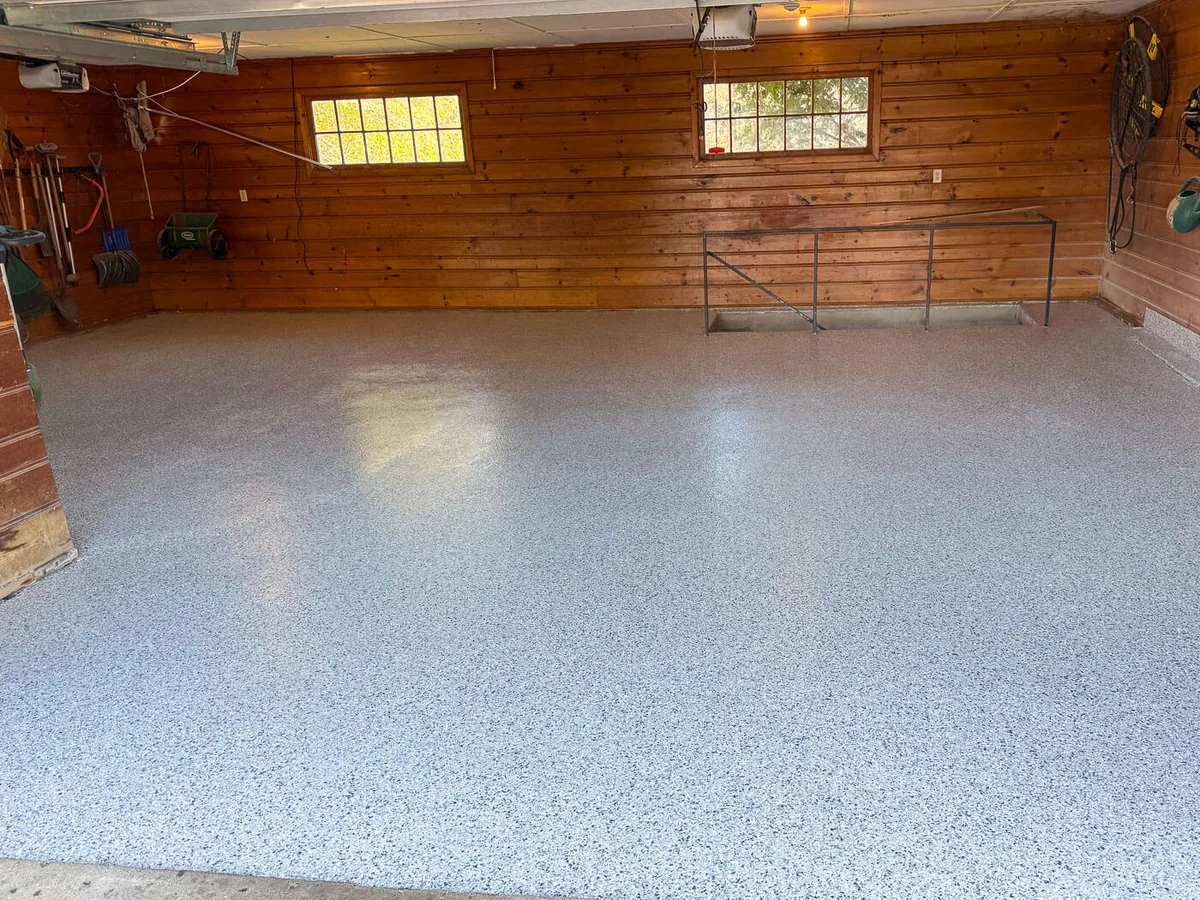
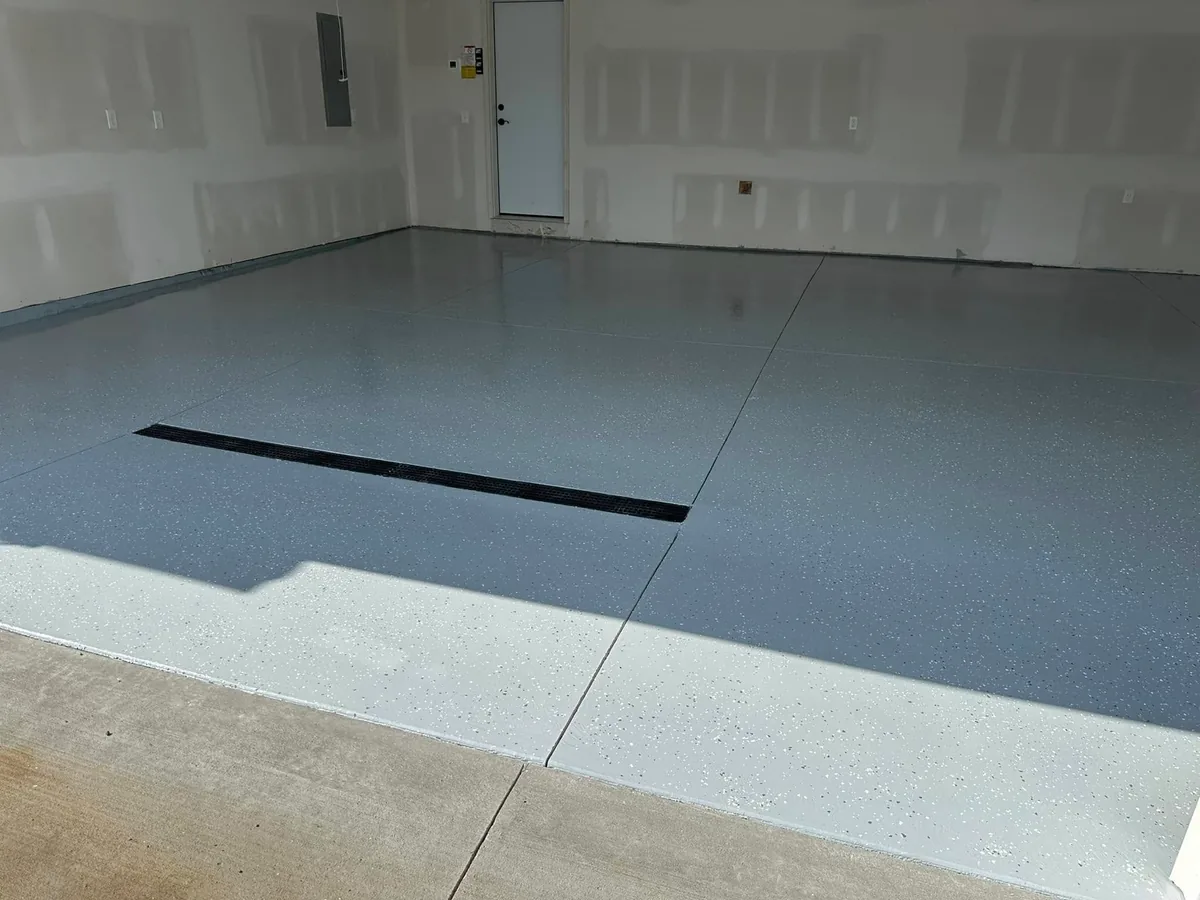
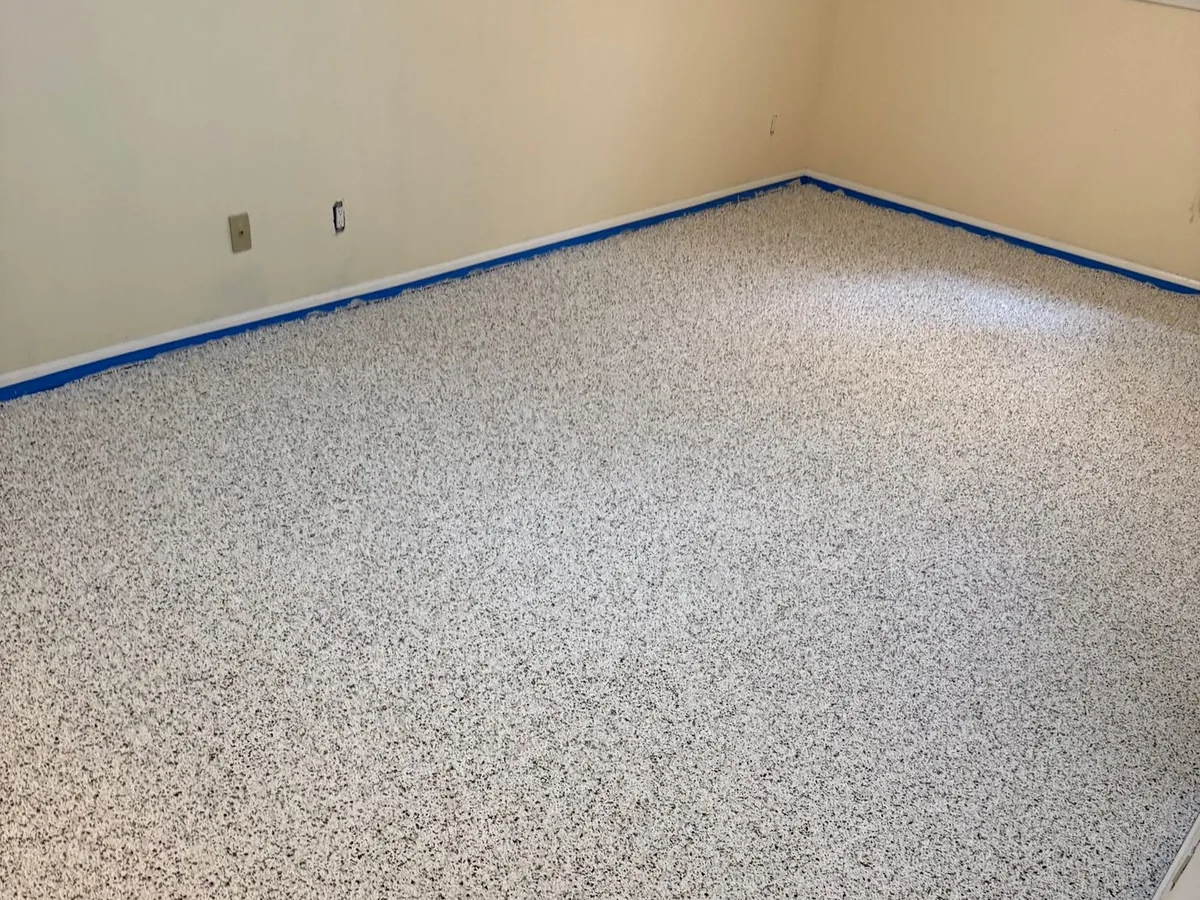
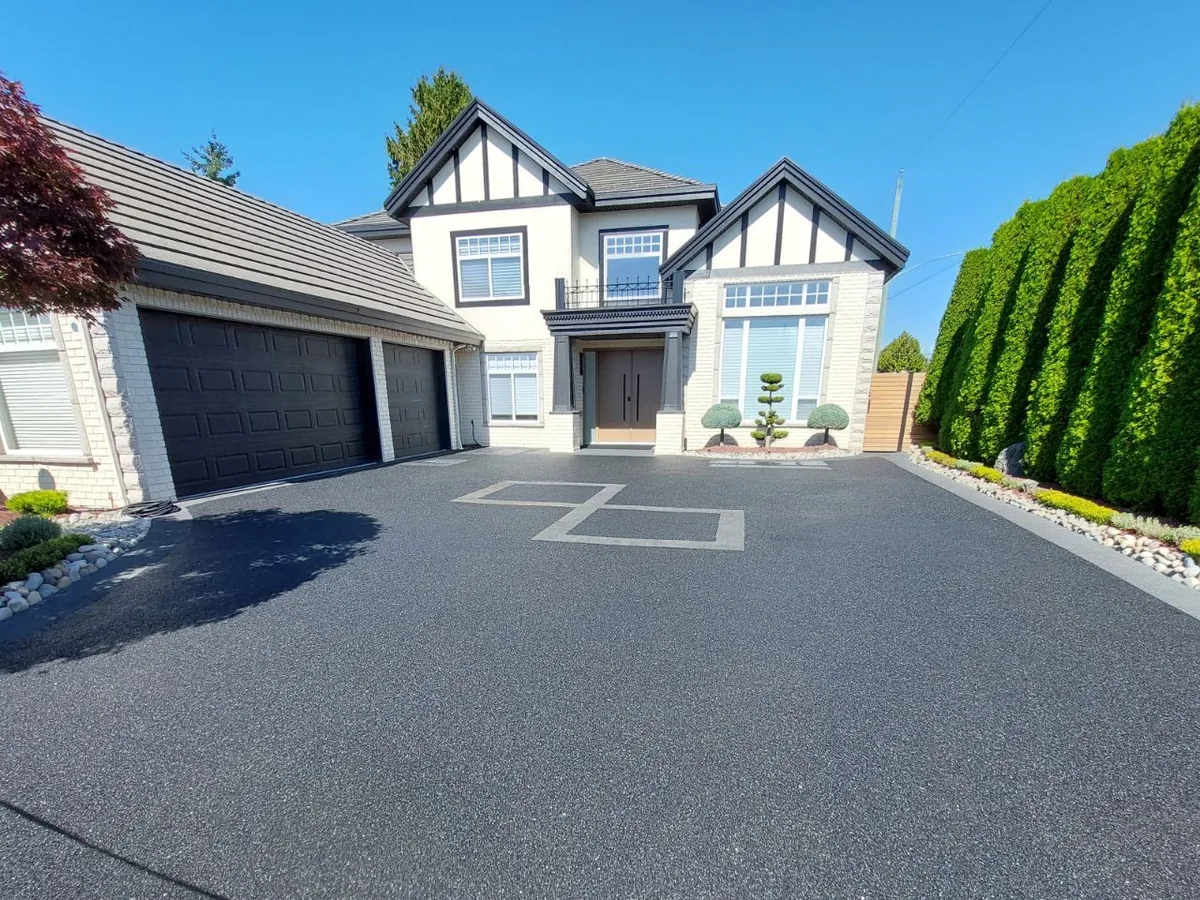
That adds up to a lot of garage floor, attached and detached, plus shop floors that take trailers and mowers. We use the same grind, repair and full flake system on a detached garage as on an attached one. For a working shop, our shop and pole barn floor coatings add quartz or textured topcoats for grip.
Why do Andover garage floors pit and flake?
Andover crews plow about 208 miles of city streets and 362 cul-de-sacs. City policy is to scrape with plows, then spread granular salt pre-wetted with brine. Salt generally goes down the centerline, with more at intersections, curves, steep grades and busy roads. Before some storms, crews also spray brine on busier streets and parking lots.
From November 1 to April 15, the city bans street parking from 1 to 6 a.m. So on winter nights, cars sit in garages and driveways, and the salty slush they carry melts onto the slab. Salt keeps the surface of concrete wetter and adds freeze-thaw cycles. Over time the top layer flakes and pits, which the concrete industry calls scaling.
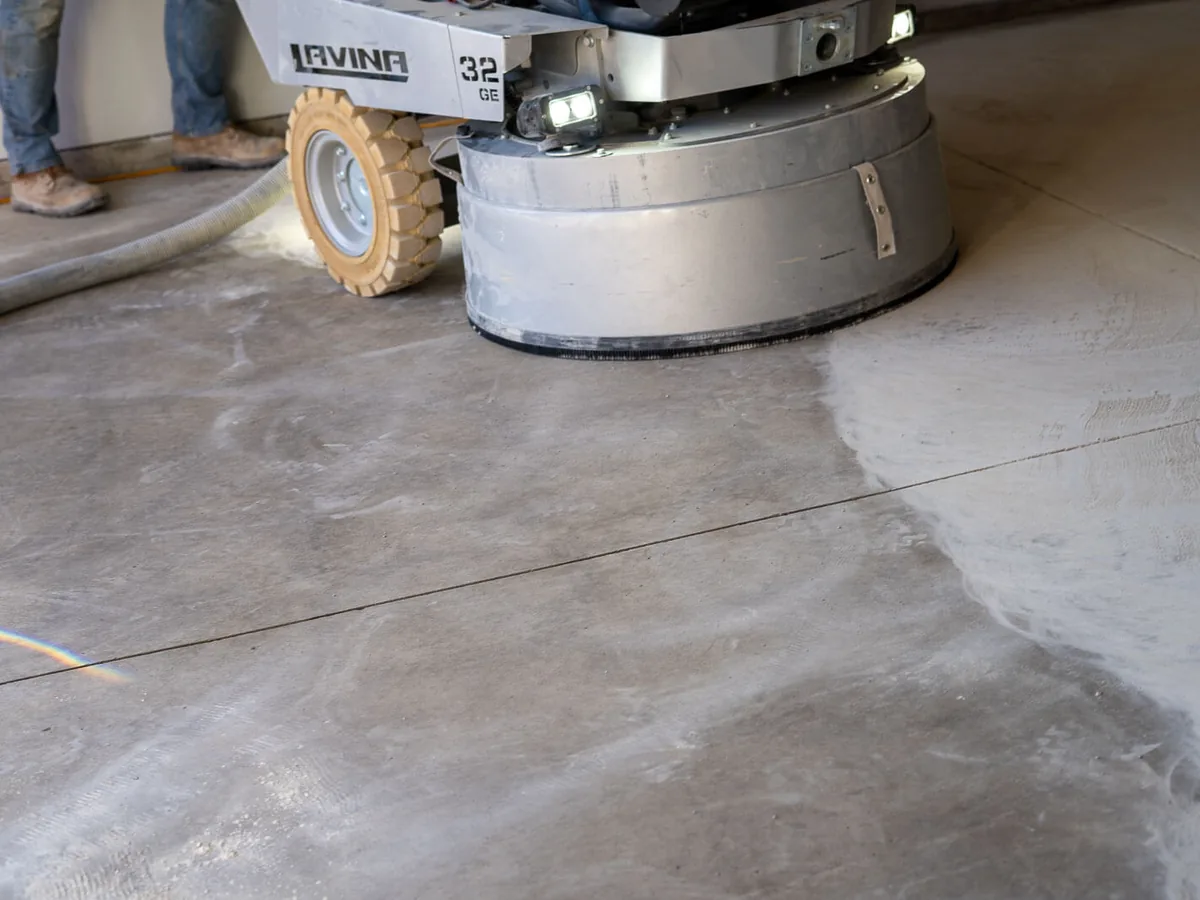
In the Twin Cities, about 75 days a year the temperature swings across freezing. If your floor is pitted from road salt, we start with a diamond grind and pit and crack repair. One maker's chart rates its full flake system excellent against salt water, motor oil and gasoline.
Basement floor coatings on the Anoka Sand Plain
Andover sits on the Anoka Sand Plain, flat, sandy ground once covered in prairie and oak woods. The city's water plan says its soils are mostly sand and sandy loam, which soak up rain quickly. For new homes, the city sets the lowest floor at least 3 feet above the seasonal high water table.
Sand pulls water up far less than clay, but vapor can still rise through a basement slab from damp ground. In summer, humid air can also condense on a cool basement floor. So a basement floor coating starts with a moisture test, plus a moisture-mitigating primer when the reading calls for one.
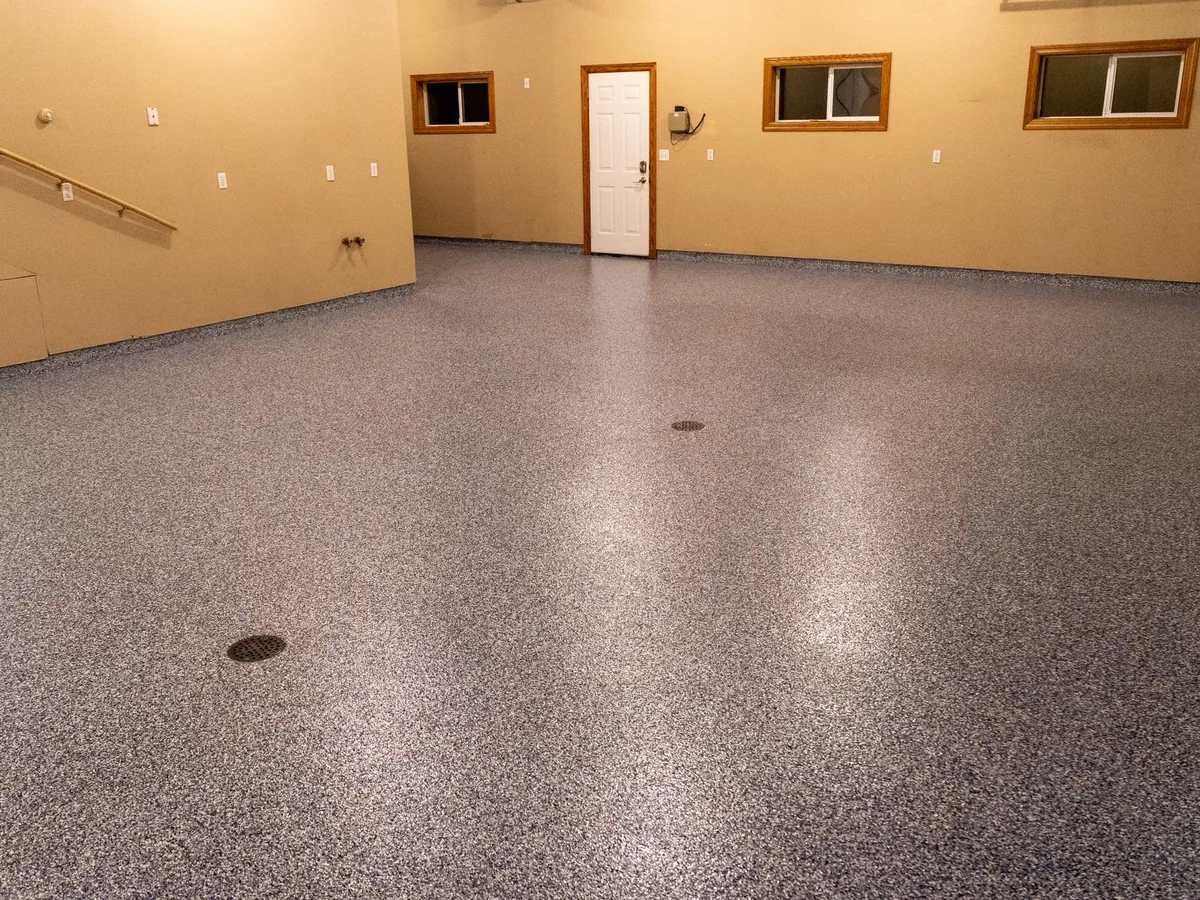
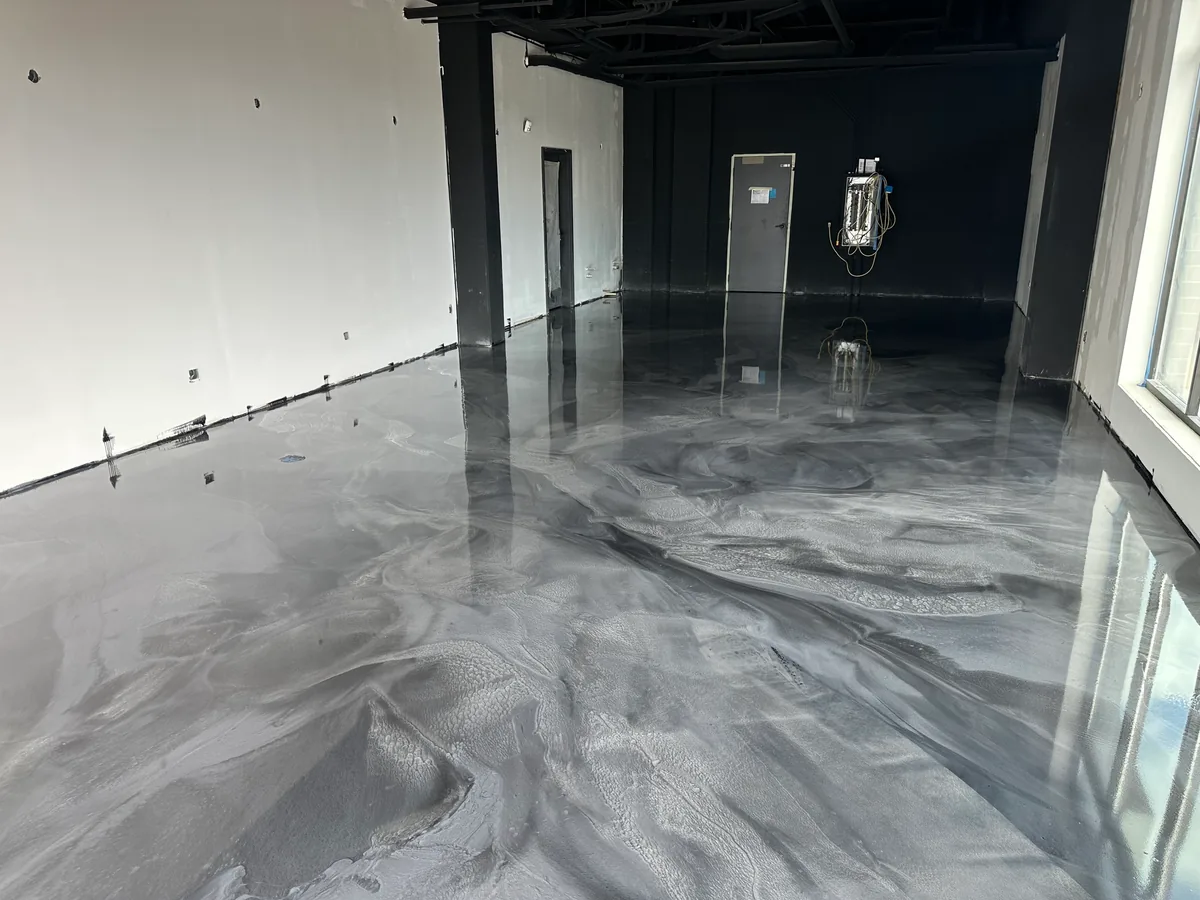
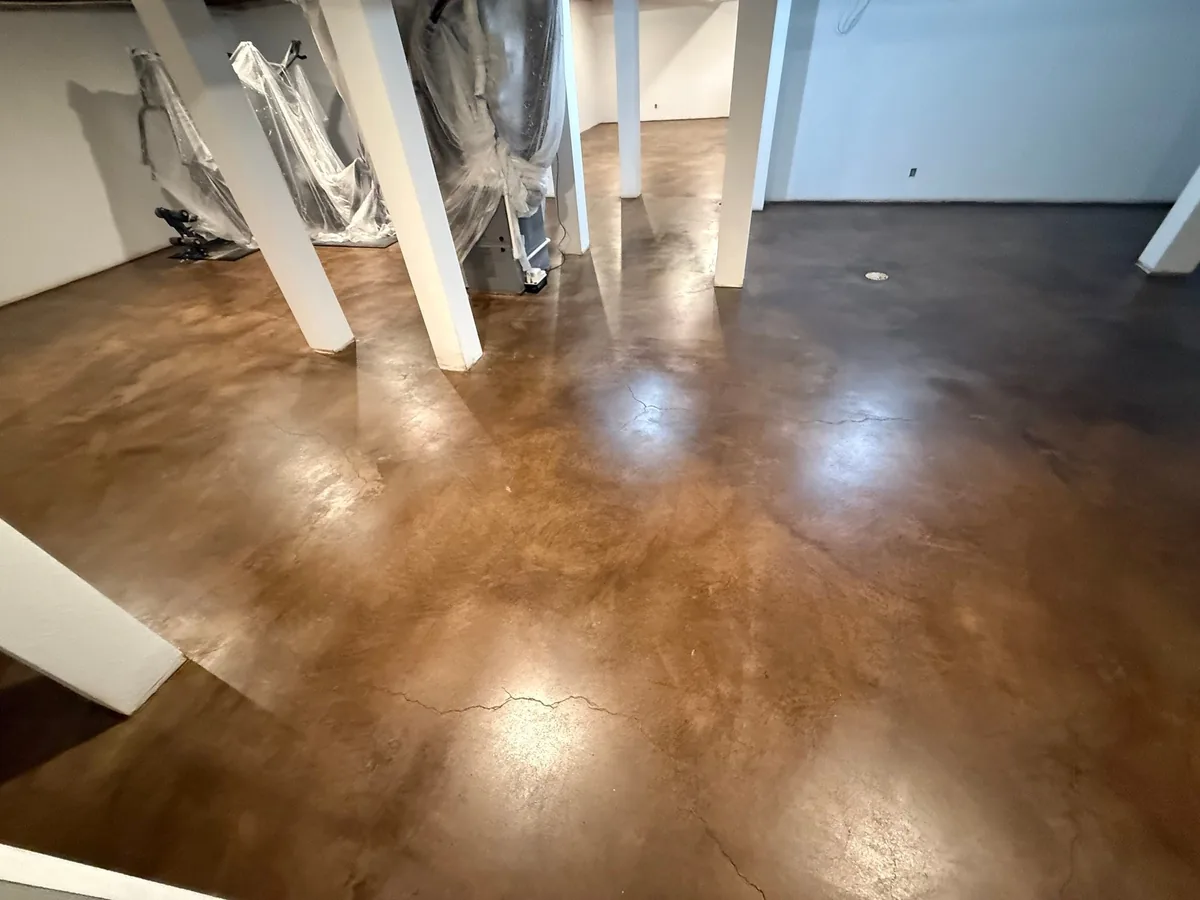
Every basement slab is mechanically ground before it is coated. Options include full flake, solid color, polished concrete, stain and seal, and metallic epoxy for a home bar.
Commercial floor coatings for Andover businesses
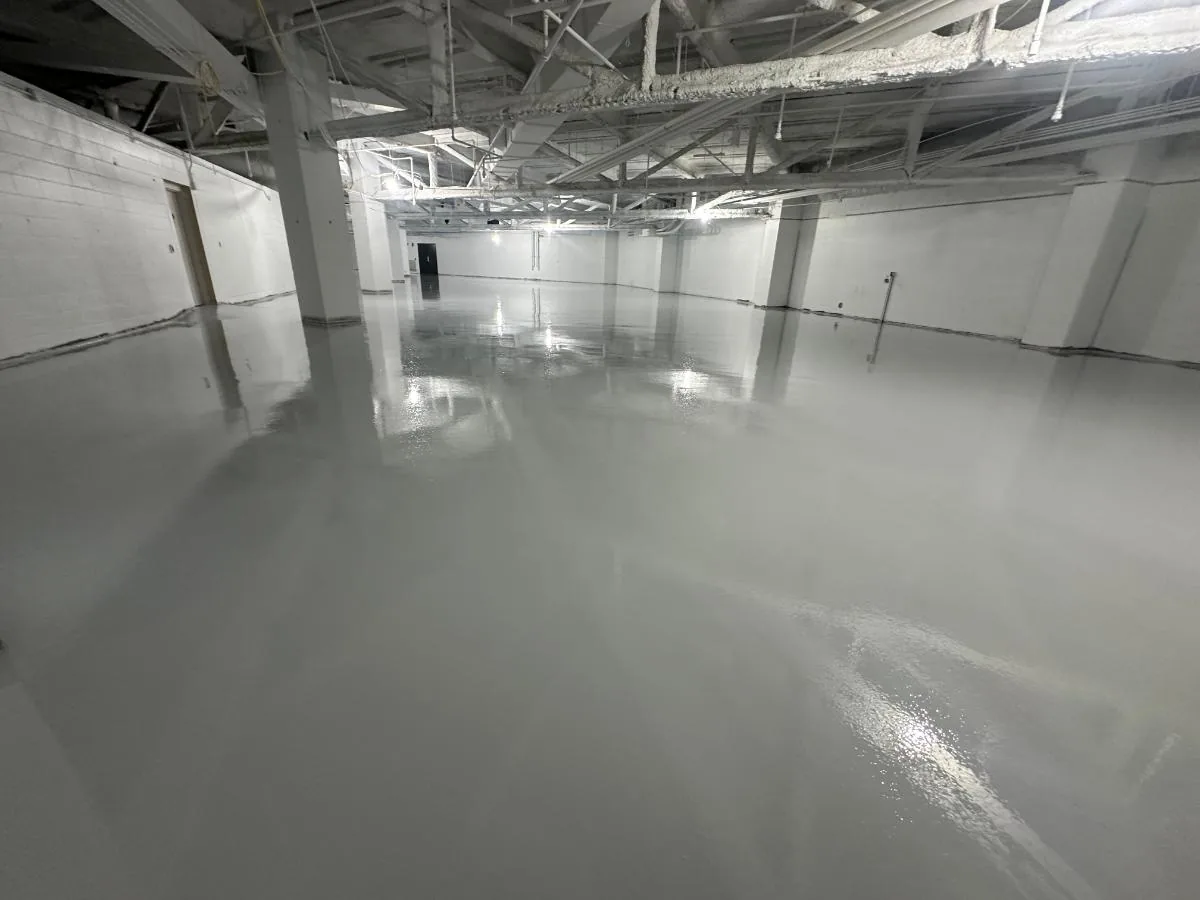
Andover's commercial land sits in nodes along Hanson, Bunker Lake and Round Lake Boulevards, Crosstown Drive and 7th Avenue. Andover Station and Andover Station North were built on former industrial land. Light industrial zones are set aside for manufacturing, warehousing and distribution.
Those floors take carts, forklifts, spills and foot traffic, and they need grip when snow melts off boots. We install commercial systems with quartz or textured topcoats, grind and polish concrete, and plan the work around your operation.
Communities and areas we serve around Andover: Andover Station North, Bunker Lake Boulevard corridor, Hanson Boulevard corridor, Nightingale Estates, Nightingale Preserve, Timber River Estates, Creekridge Estates, Kadlec Estates, East Round Lake Estates, Cedar Crest Estates, Country Oaks North.
Andover ZIP codes served: 55304.