Garage floor coatings for St. Paul's older homes and alley garages
Census figures put the median year built for all St. Paul housing at 1952. Only about one home in ten dates from 2000 or later. The early 1900s brought a wave of houses along the streetcar lines. After World War II, building reached the city's north and east edges and Highland Park.
St. Paul has about 2,225 alleys, roughly 330 miles of them. City zoning puts home parking access on the alley when a lot has one. The city does not plow or treat alleys in winter, so many blocks hire a private plow contractor. Whatever the alley and the street leave on your tires ends up on the garage floor.
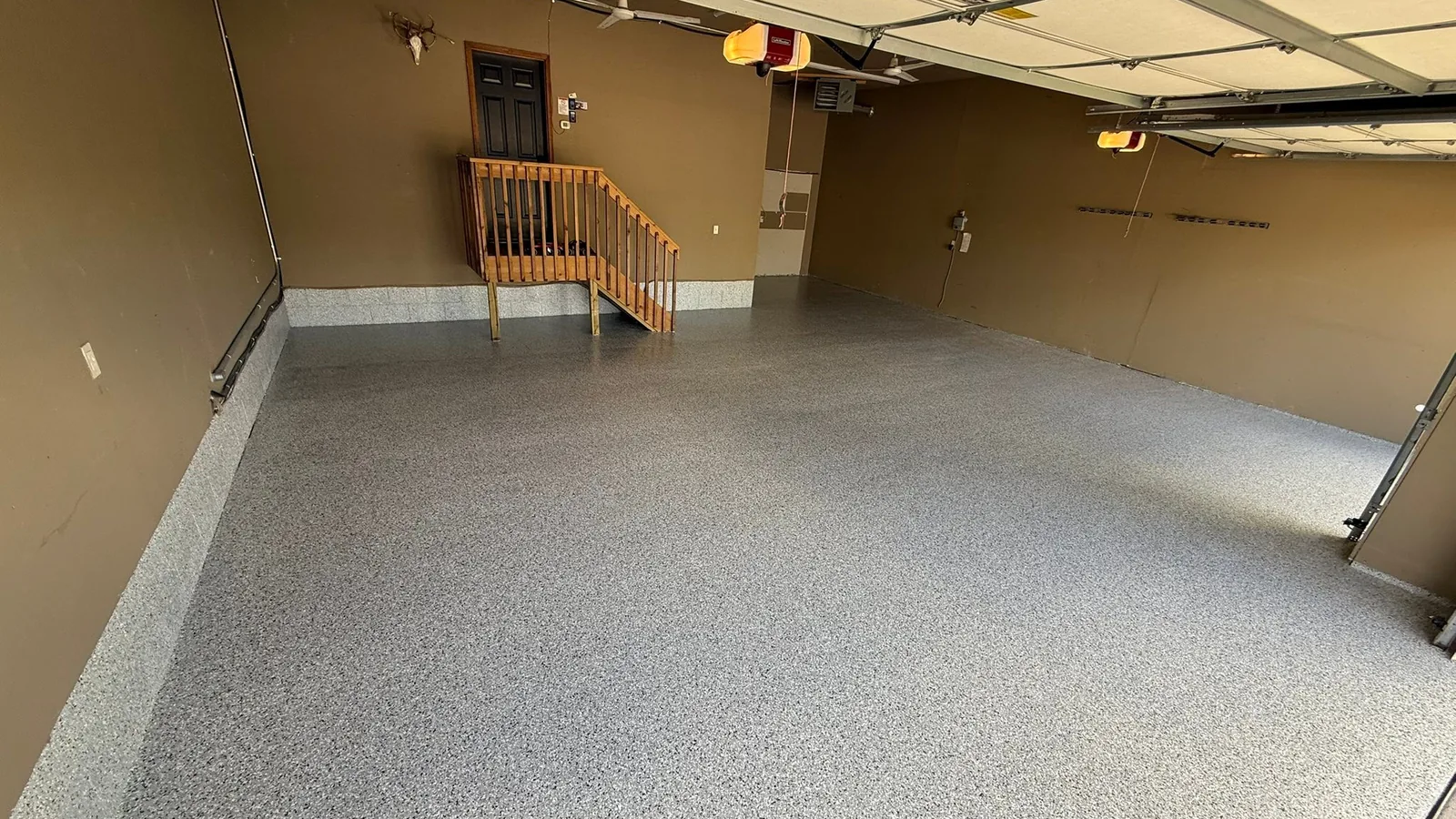
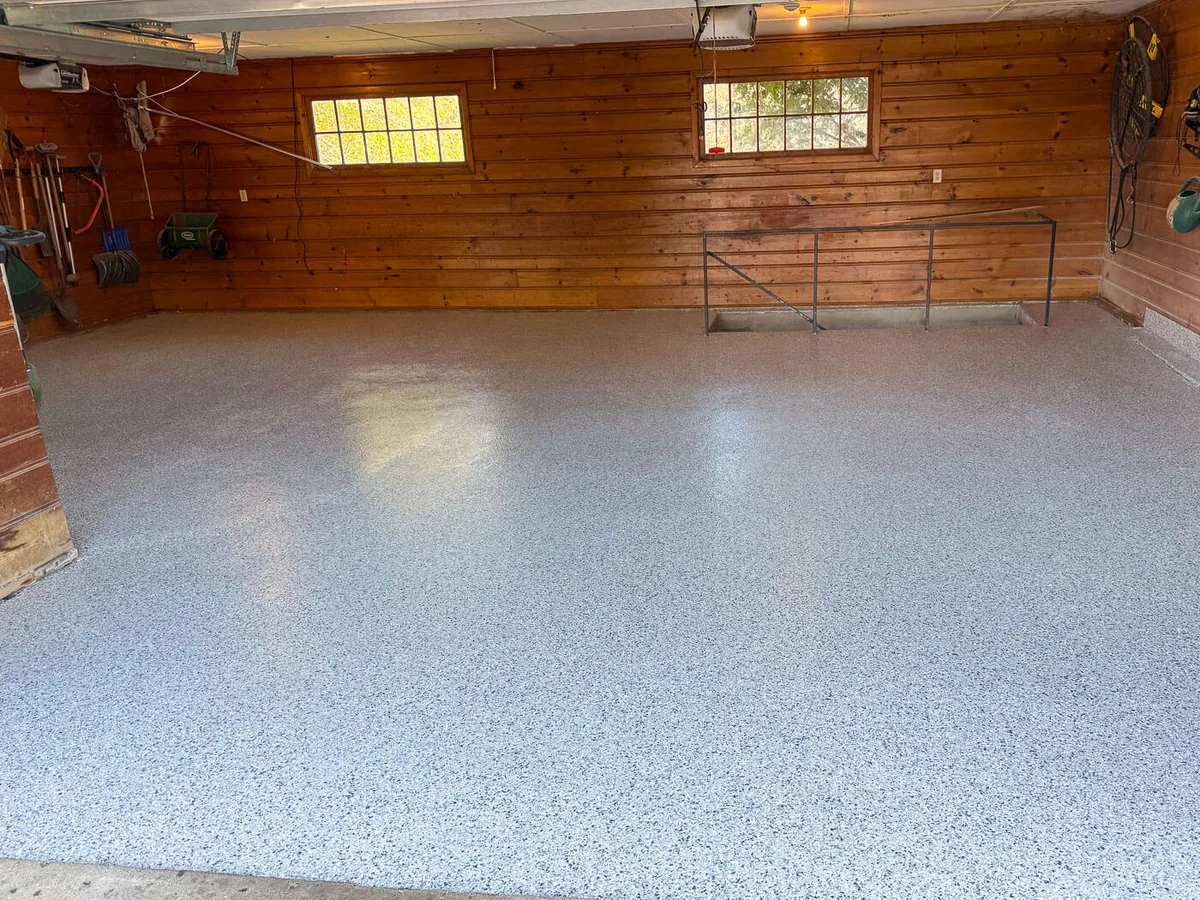
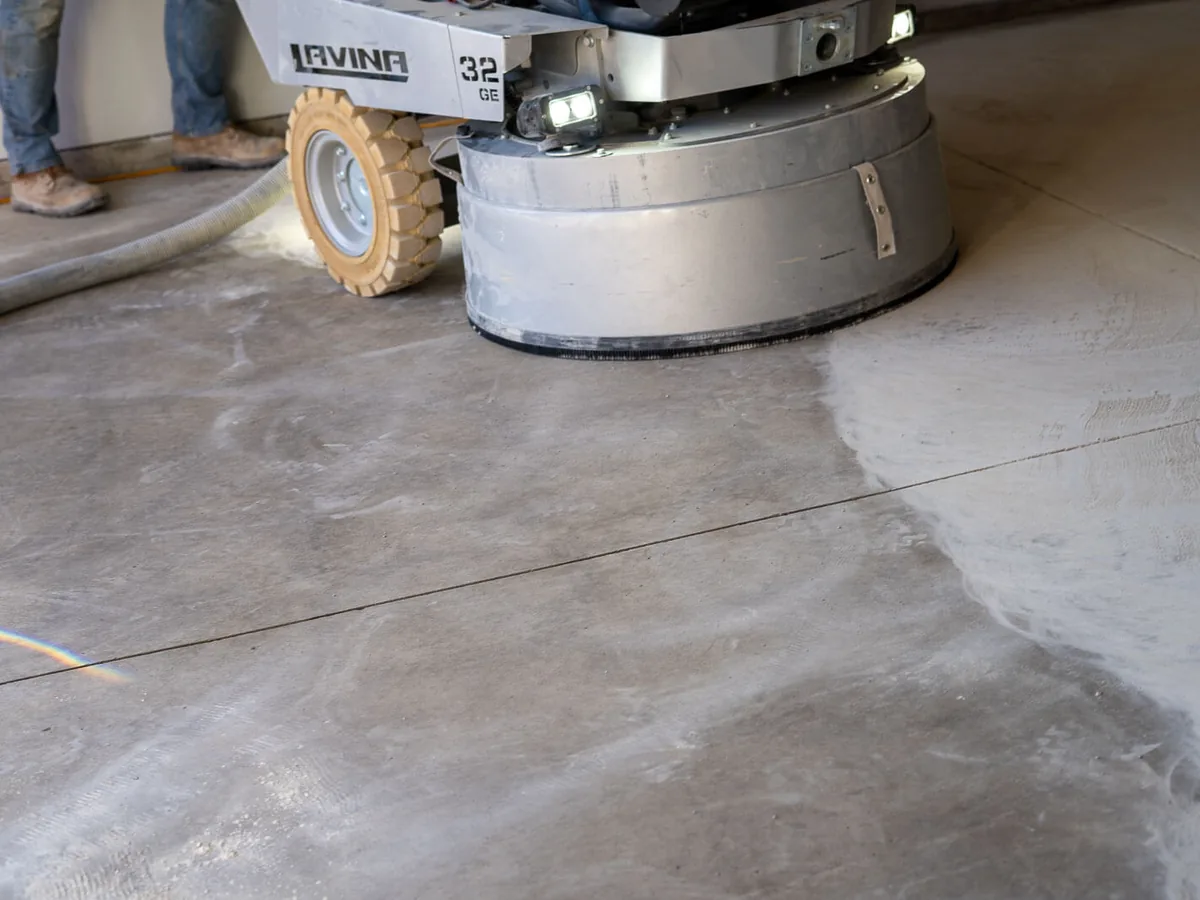
If your garage floor is pitted from road salt or the old paint is peeling, prep matters most. Slab Lab was founded by a former coating inspector, so we diamond grind and check moisture first. Then comes crack, pit and spall repair, before any base coat goes down. We are rated 4.8 on Google from 34 reviews, and several describe salt-damaged floors repaired before coating.
What do road salt and St. Paul winters do to a garage slab?
The Minnesota Pollution Control Agency estimates 365,000 tons of road salt go down in the Twin Cities metro each year. The city's 2040 plan notes that road salt for the region comes into St. Paul by barge. Cars carry that salt home as slush, and it drips onto the garage floor.
Salt keeps the concrete surface wetter and adds freeze-thaw cycles. The result is scaling: the surface flakes off and the floor turns rough and pitted. In the Twin Cities, about 75 days a year the temperature swings across freezing. The city itself warns against salting new concrete aprons in their first winter, because salt damages new concrete.
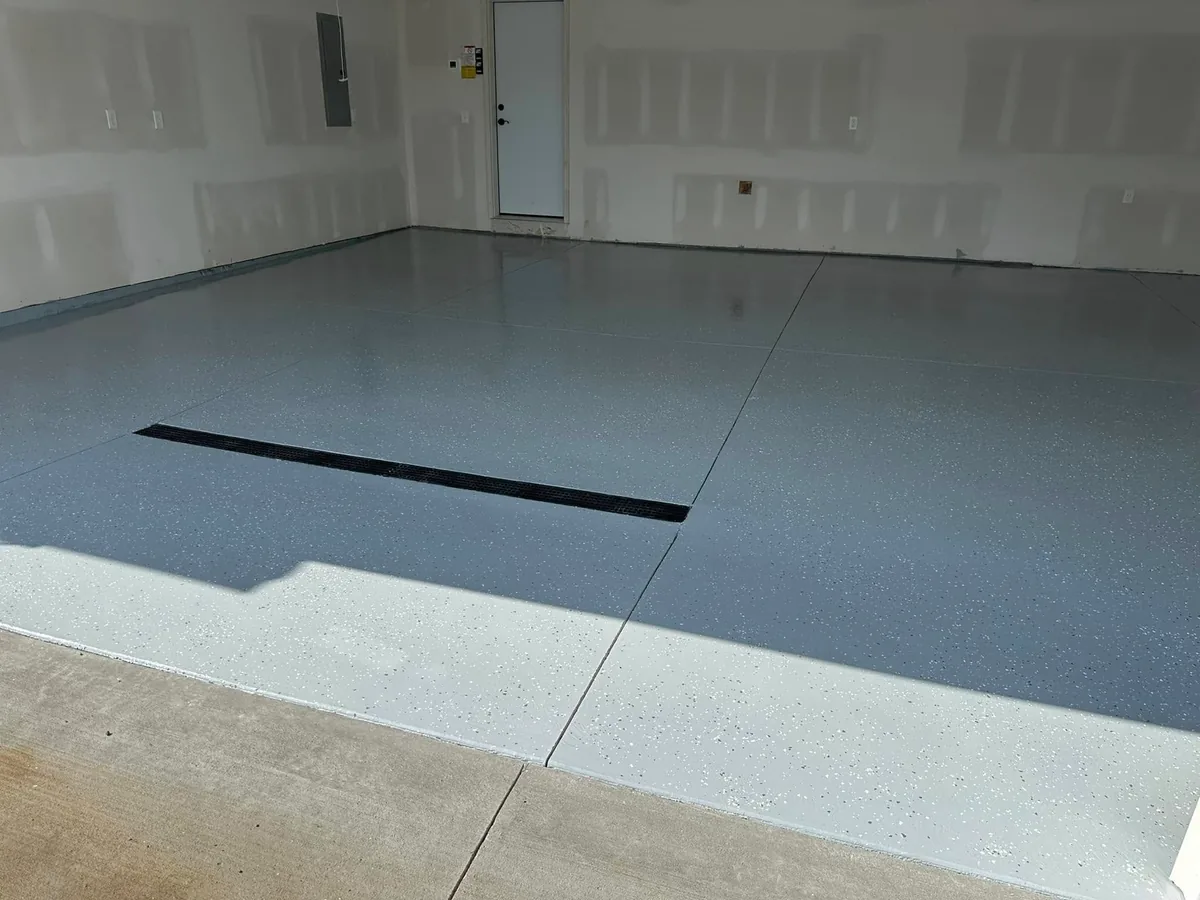
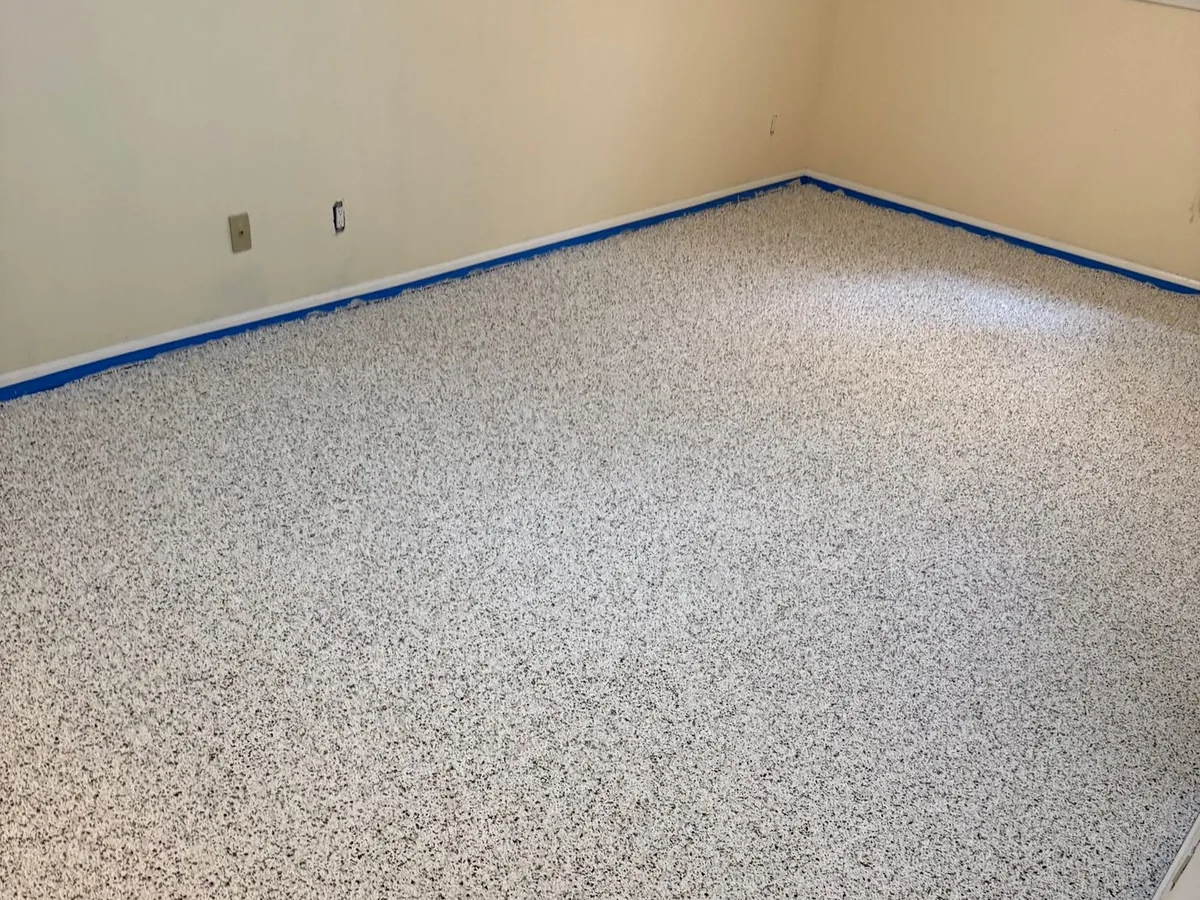
A full-flake coating puts a chemical-resistant layer between the slush and the concrete. Our systems are chosen for Minnesota salt and freeze-thaw, and the polyaspartic topcoat hardens in 6 to 8 hours.
Commercial and industrial floor coatings for St. Paul businesses
The city's 2040 plan singles out four industrial areas of regional economic importance. They are West Midway, the Great Northern corridor, the river industrial areas and part of West Side Flats. The plan describes industrial land as manufacturing, processing, warehousing and the transportation of goods. St. Paul's four river terminals alone host 34 companies and more than 1,000 jobs, per a 2017 Port Authority count.
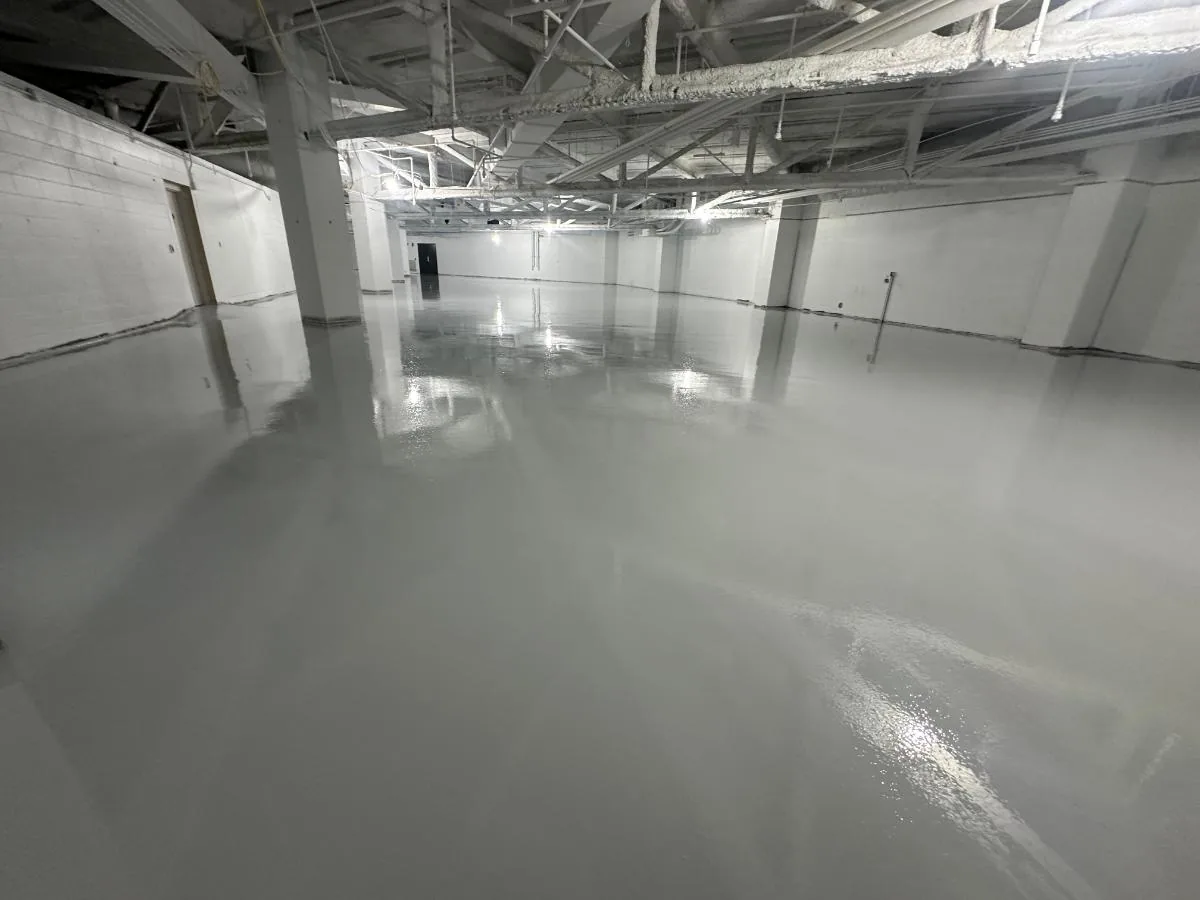
Warehouse and shop floors take forklift and pallet-jack traffic, spills and slush from the dock door. Our commercial and industrial floor coatings are built for heavy equipment and chemical exposure. Quartz and textured topcoats add slip resistance. OSHA's general-industry rule calls for walking-working surfaces kept free of hazards like leaks, spills, snow and ice.
Downtown is the office center of the East Metro, in the plan's words. Retail runs along commercial streets like Grand Avenue, Selby Avenue, White Bear Avenue and University Avenue. Highland Bridge, on the former Ford plant site, adds new office and retail space. Showrooms and offices may suit polished concrete or a coating, and we plan the work around your operation.
Basement floor coatings in St. Paul: moisture comes first
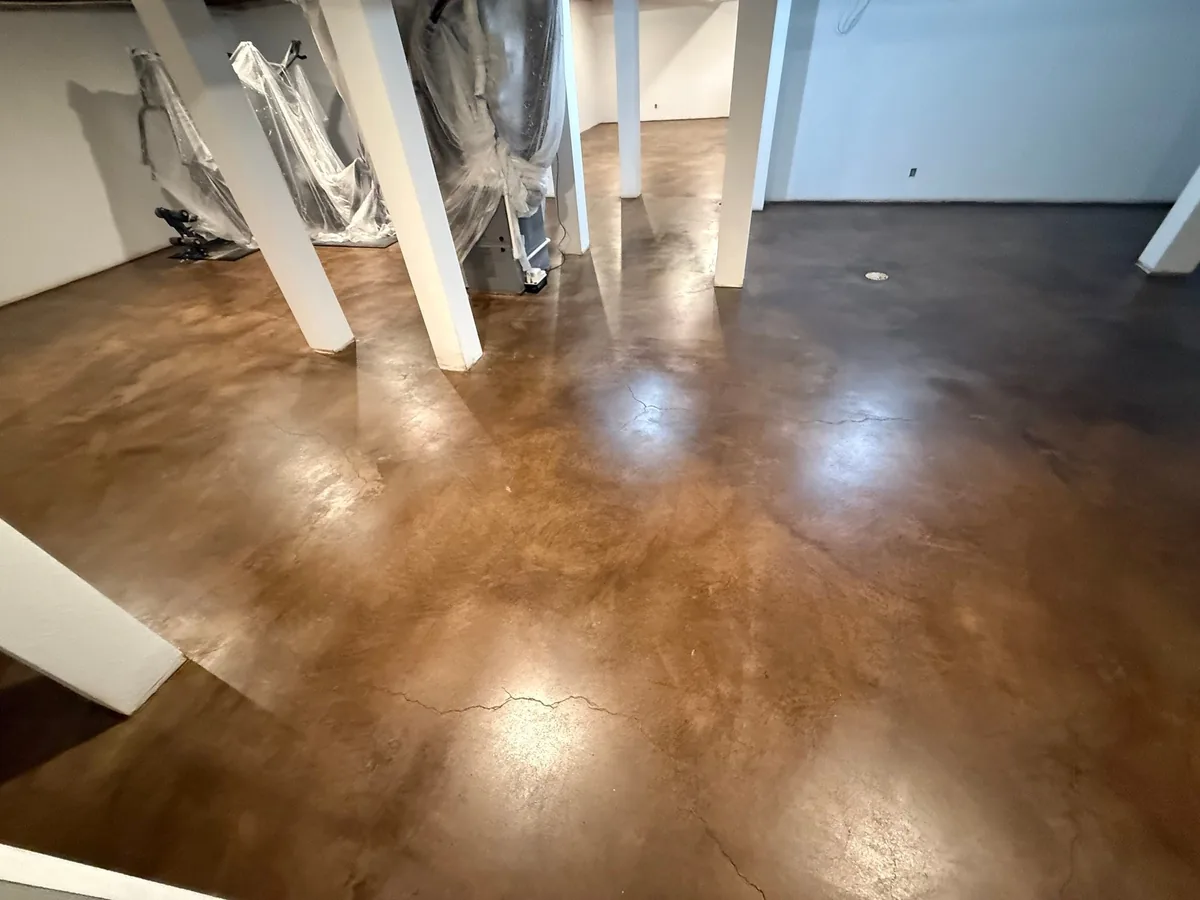
In an older St. Paul house, the basement floor may be the original slab. More Minnesota basements are being finished as living space, notes University of Minnesota Extension. Moisture is the catch. Vapor moves from the wetter ground up through the concrete, and summer humidity can condense on a cool floor.
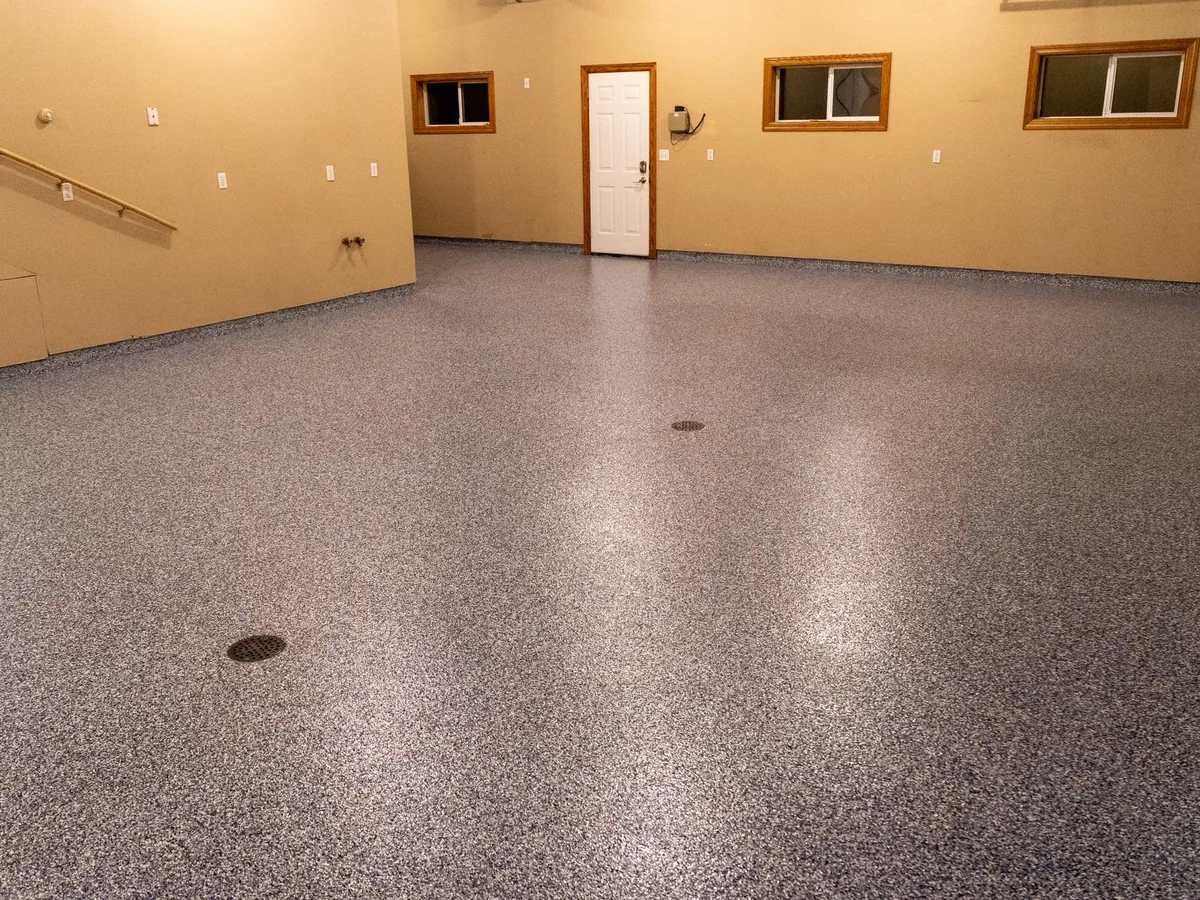
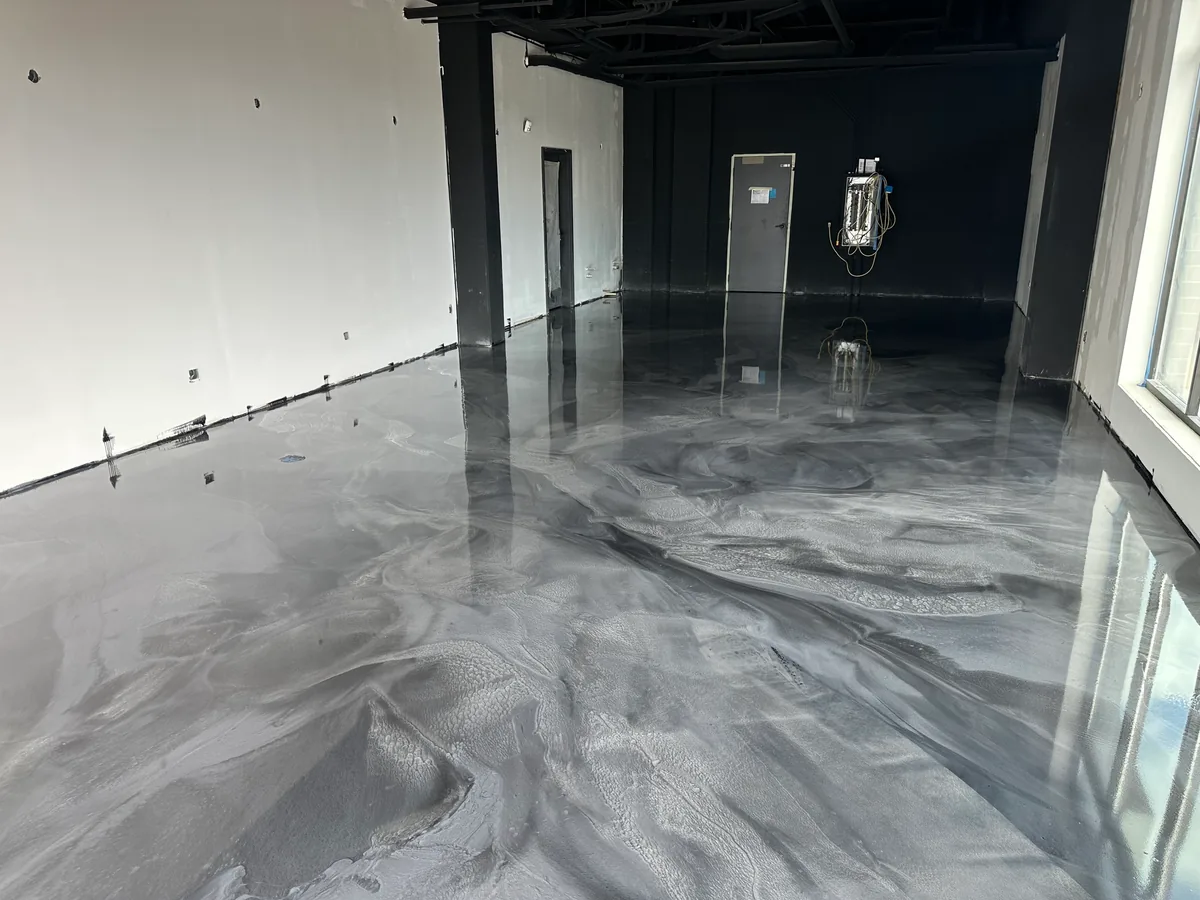
So every basement floor coating we install starts with grinding and a moisture test. A moisture-mitigating primer goes down when the slab needs one. Finishes include flake, solid color, polished concrete, stain and seal, metallic epoxy and overlays for damaged slabs. A heated basement is interior work, so it does not have to wait for summer.
Communities and areas we serve around St. Paul: Highland Park, Macalester-Groveland, Merriam Park, Hamline-Midway, St. Anthony Park, Como Park, North End, Payne-Phalen, Greater East Side, Dayton's Bluff, Battle Creek, West Seventh.
St. Paul ZIP codes served: 55101, 55102, 55103, 55104, 55105, 55106, 55107, 55108, 55114, 55116, 55117, 55119, 55130.