
Before and after
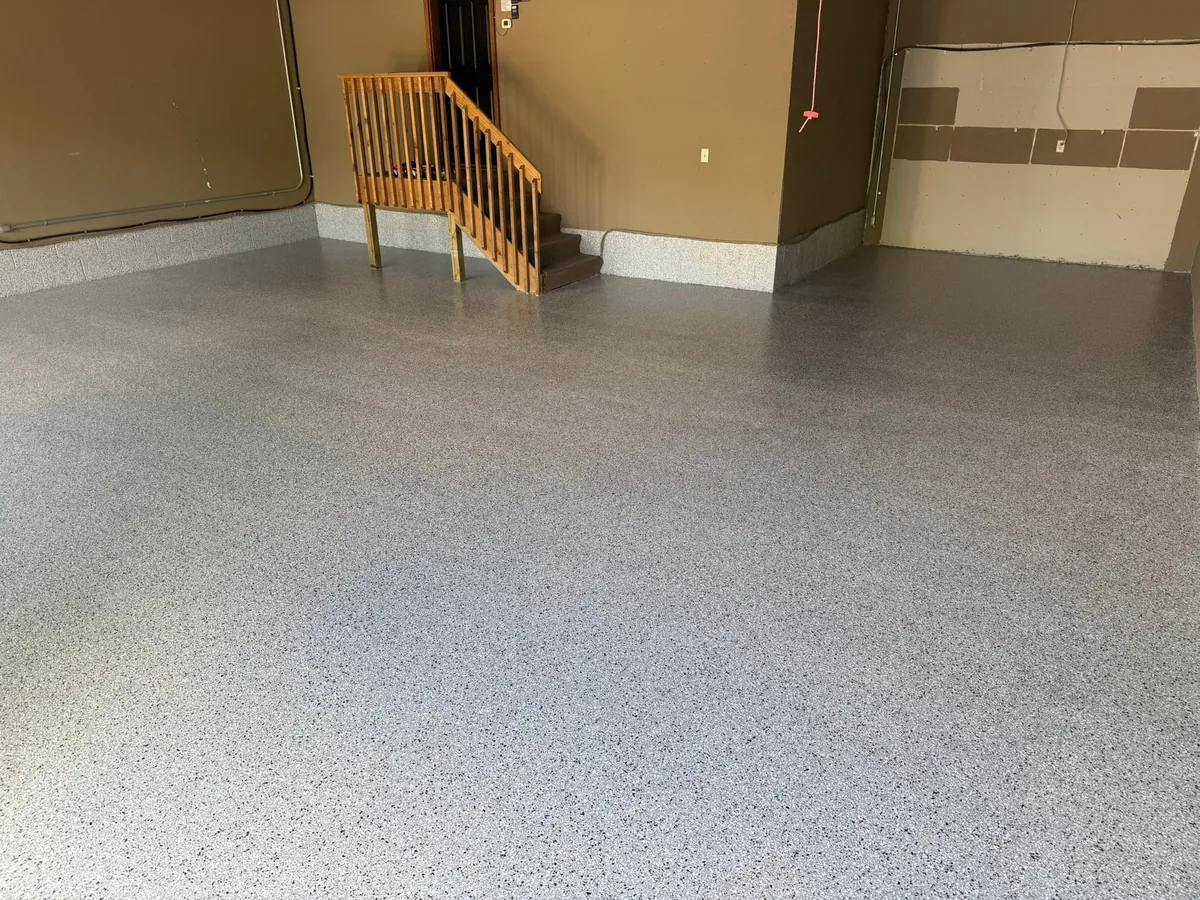
Wood-Walled Garage, Light Gray Flake
Before: a big garage with wood walls and a bare, stained slab. After: a light gray flake floor with a glossy topcoat.
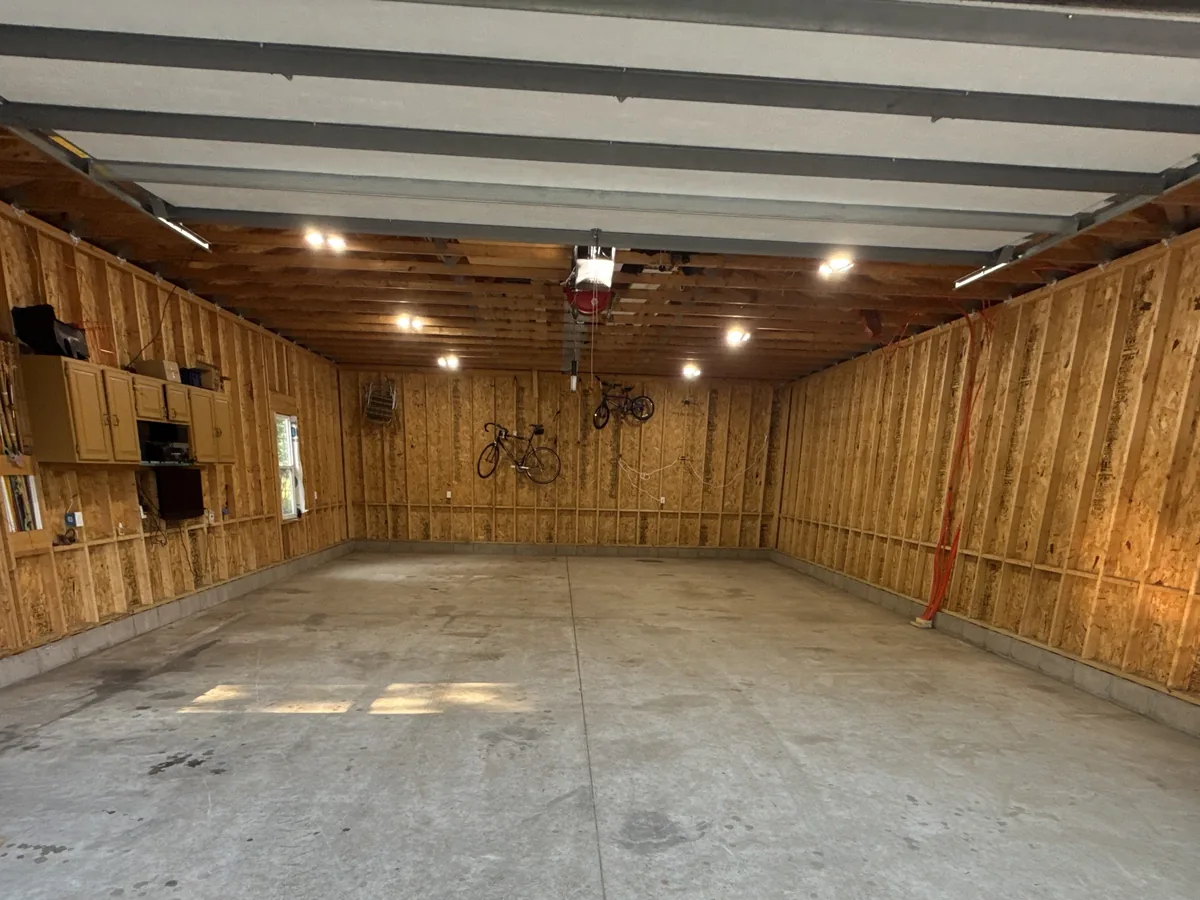 Before
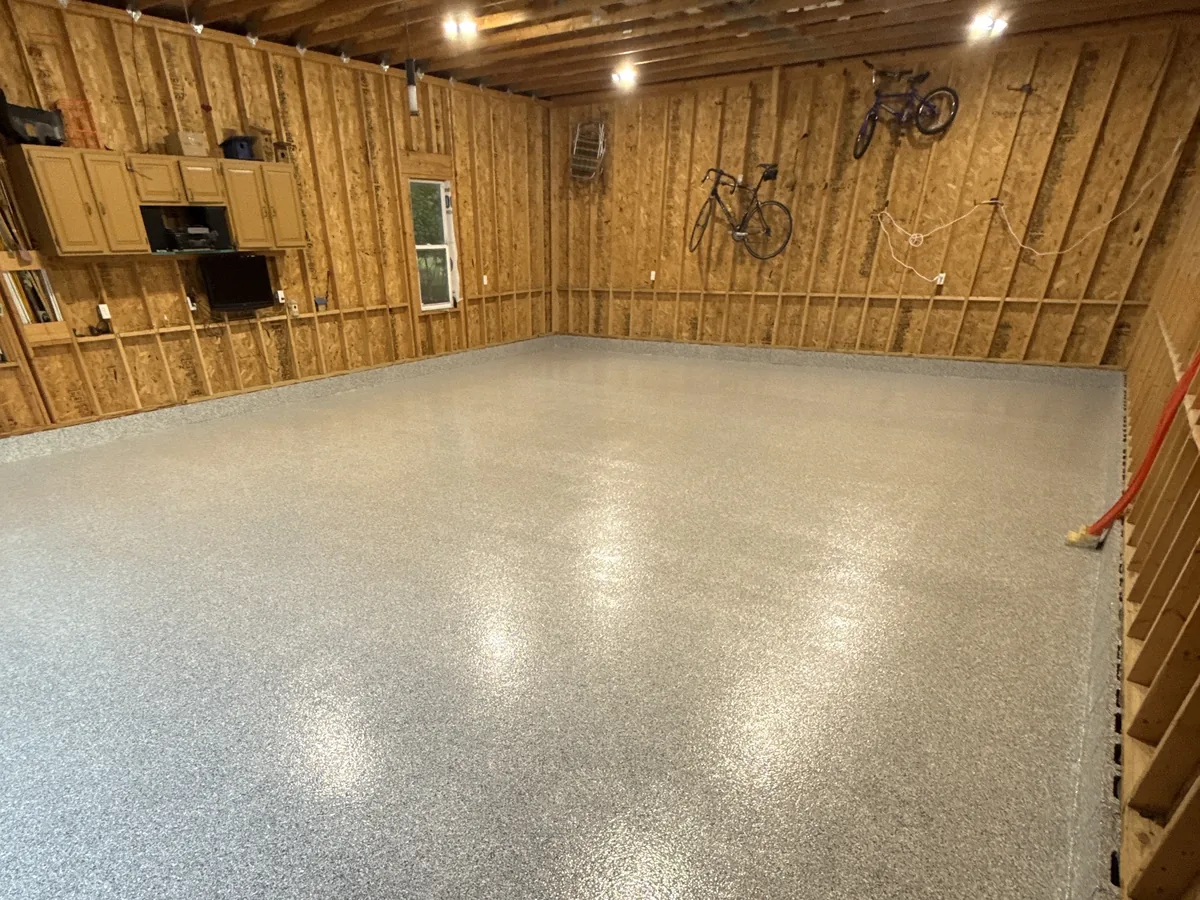 After
After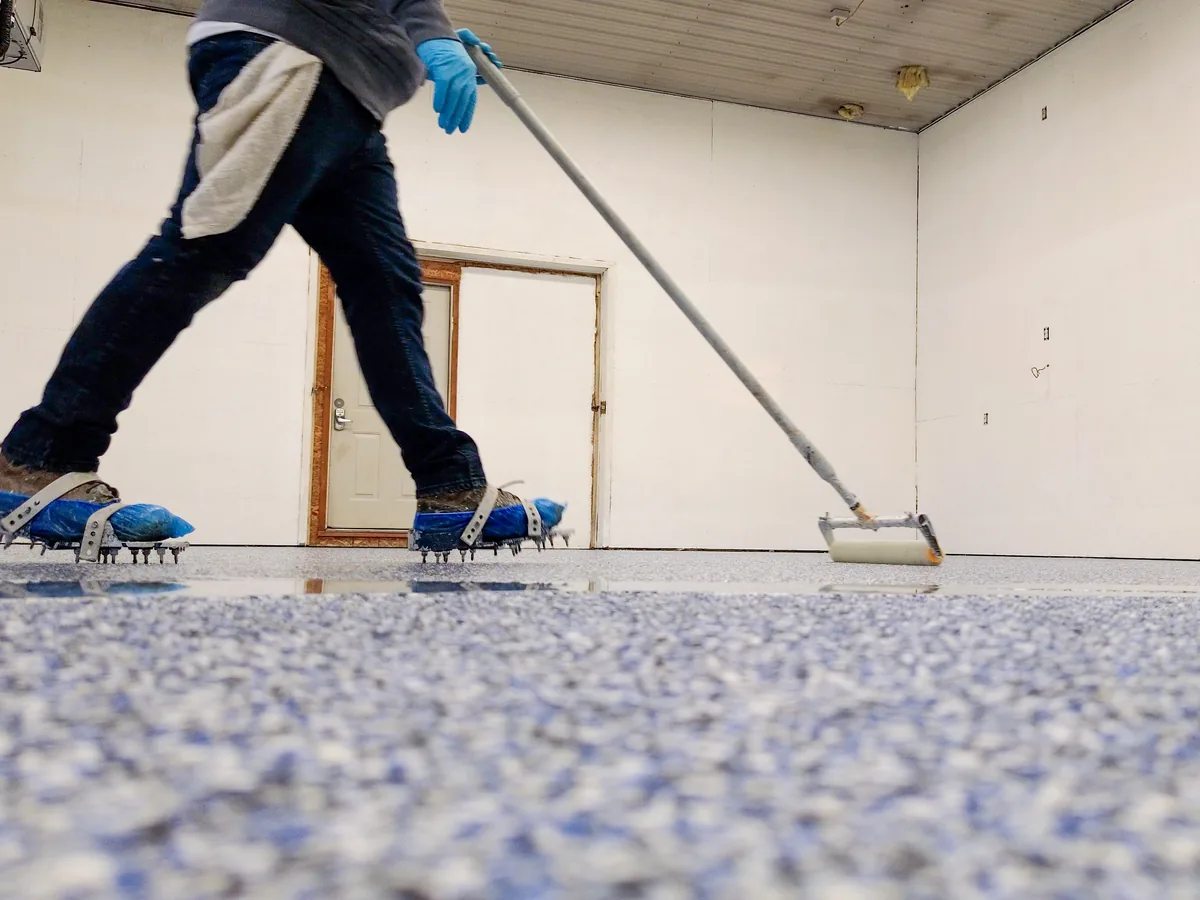
A polyaspartic floor coating is a fast-curing, two-part coating from the polyurea family. It is the topcoat on our garage floor coatings and on the epoxy floors we coat for homes and businesses. Our polyaspartic topcoat hardens in 6 to 8 hours and will not yellow in sunlight. We install these systems from our Otsego base across the Twin Cities metro.
Maybe the old epoxy turned yellow by the garage door, or a kit coating peeled after one winter. Our polyurea garage floor coating systems start with diamond grinding and a moisture test. Cracks and pits get repaired, then an epoxy or polyaspartic base coat goes down under a full flake broadcast. The polyaspartic topcoat seals it, and most garages are coated in one day.
Tell us about the floor. We come out, look at the slab and give you a free estimate.
Polyurea forms when two liquid parts react, and that reaction is very fast. Pure polyurea sets so quickly that it is usually sprayed with special two-part equipment.
Polyaspartic is a modified polyurea that reacts slower. The extra time lets an installer mix it in a bucket and roll it onto a floor. It is made with aliphatic ingredients, which help it hold its color in sunlight.
Next to epoxy, polyaspartic still sets up fast. Epoxy data sheets commonly call for 12 to 24 hours before the next coat. Some polyaspartic data sheets allow the next coat after an hour or two. That short wait is what makes a one-day garage floor possible.
Slab Lab is a Minnesota company, and our systems are chosen for Minnesota winters. Standard epoxy data sheets commonly set 50°F or warmer as the minimum for the floor and the air. In the Twin Cities, the normal daily average temperature sits below 50°F from mid-October to about April 20. An unheated garage slab can stay cold for much of that stretch.
Polyaspartic data sheets reach lower. One lists a 40°F minimum surface temperature, and another allows application down to 14°F. A third maker's flake system switches to its fast-cure polyaspartic topcoat below 60°F. That gives a cold garage more workable days in spring and fall, though cold still slows the cure.
About 75 days a year the Twin Cities temperature swings across freezing, and slabs expand and contract with it. Elongation is how far a coating stretches before it tears. Two polyaspartic data sheets list 40 and 51 percent, while two epoxy sheets list 5 and 20 percent. That extra stretch gives a polyaspartic topcoat more room to move with the slab.
Sunlight is where epoxy falls short. Epoxy data sheets warn it will turn amber and chalk in ultraviolet light. One says a topcoat is needed where color matters. A polyaspartic topcoat will not yellow, even by a sunny garage door.
Epoxy still belongs under the topcoat. It is the base coat in our standard epoxy floor coatings, and metallic floors are built in clear epoxy. Slab moisture is another reason. One maker's polyurea base coat allows 75 percent slab humidity, while its moisture-tolerant epoxy base allows 85 percent.
The trade-off is a short working time. Once mixed, data sheets give about 10 to 30 minutes, and heat and humidity cut that down. One sheet warns that inexperienced installers can leave lap lines, so this is work for trained hands. Slab Lab was founded by a former coating inspector, and every slab gets inspector-level surface prep before the first coat.
Free estimates and site visits across the northwest metro and the Twin Cities, about 40 miles around Otsego.
(612) 702-9724Our own photos from recent garage jobs, plus the flake going down. See more of our work.
Before: a big garage with wood walls and a bare, stained slab. After: a light gray flake floor with a glossy topcoat.
BeforeAfterBefore: a bare slab with a long crack running across it. After: a gray flake floor.
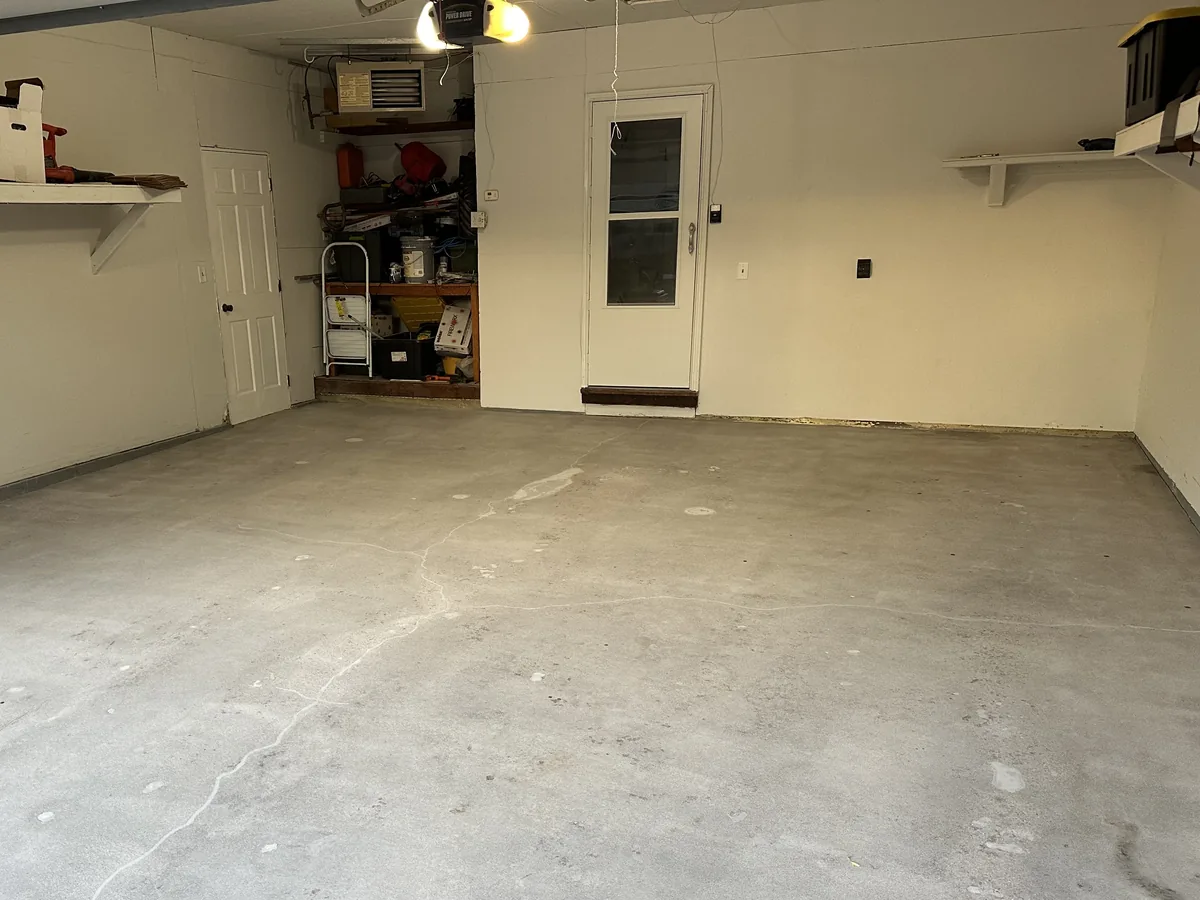 Before
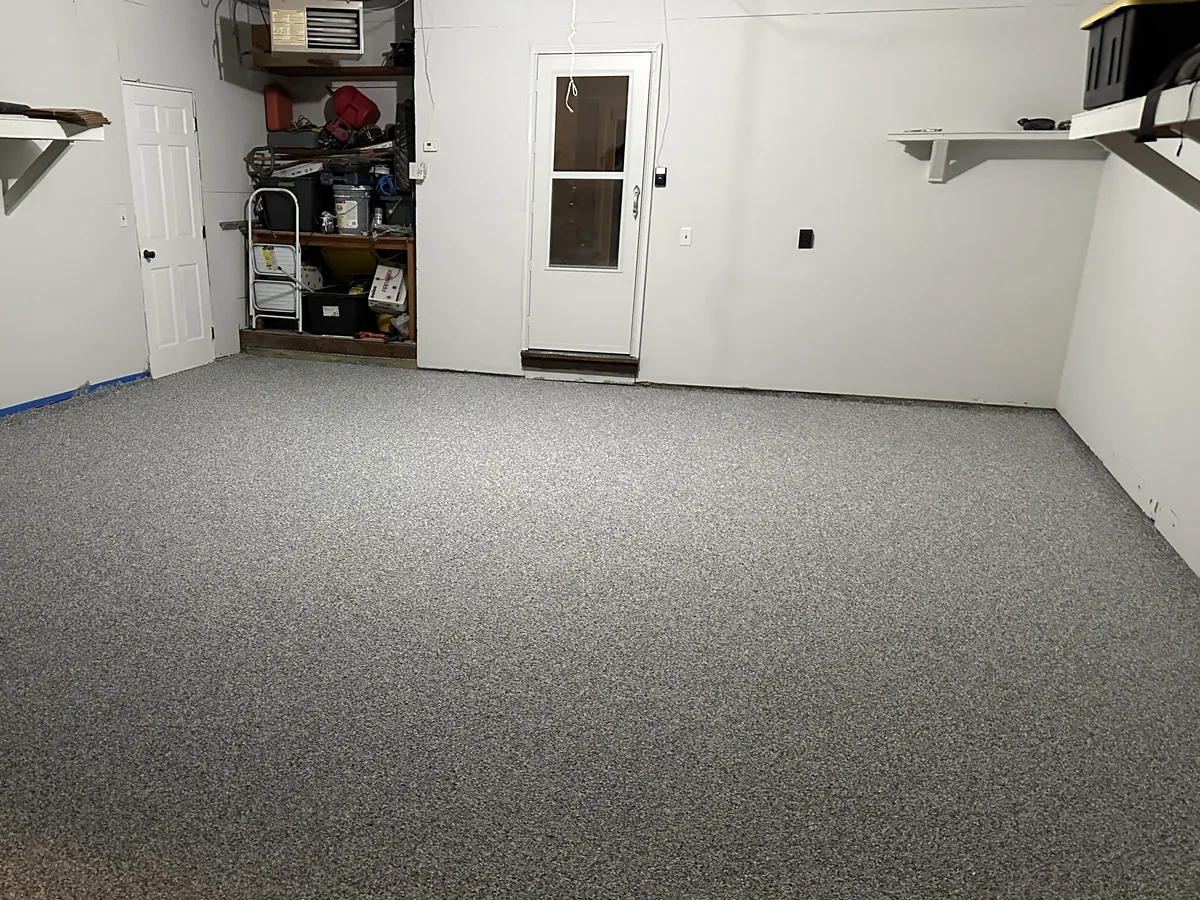 After
AfterFrom the first call to the final topcoat, here is how it goes.
Call or text (612) 702-9724, or send the form. We look at the slab and put the system, repairs, mil thickness and price in writing.
We diamond grind the slab with dust extraction to open the surface for a strong bond. Then we test the concrete for moisture.
We fill cracks and chips, including salt pits near the door. The coating goes down over sound, smooth concrete.
A high-solids, self-priming epoxy or polyaspartic base coat goes down over the ground slab. This is the layer that bonds to the concrete.
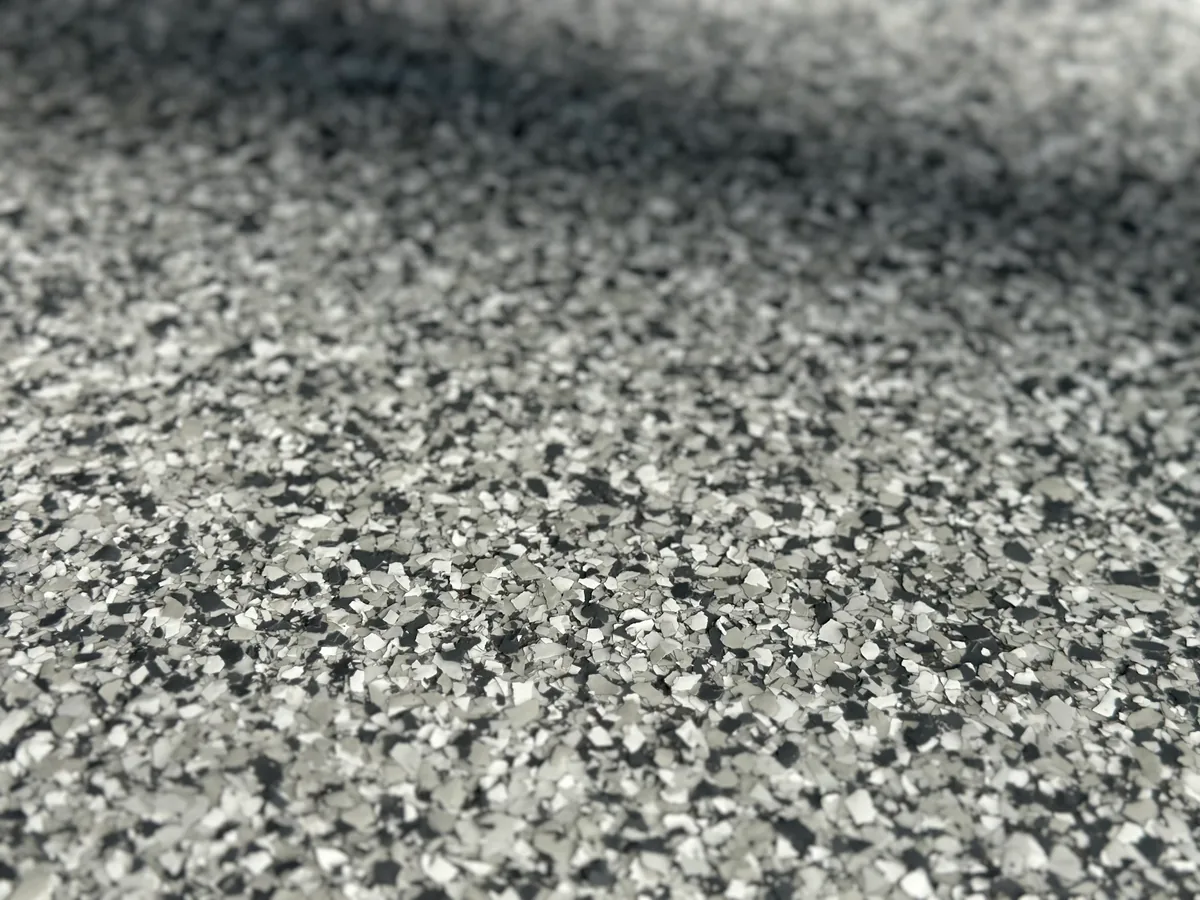
We broadcast polymer flake across the wet base coat until it is fully covered. Then we scrape off the excess for a consistent texture and grip.
A scratch-resistant, UV-stable polyaspartic topcoat seals the floor and hardens in 6 to 8 hours. The crew leaves care instructions and tells you when to park.
Common questions about polyaspartic coatings across the northwest metro and the Twin Cities, about 40 miles around Otsego. If yours is not here, call and ask.
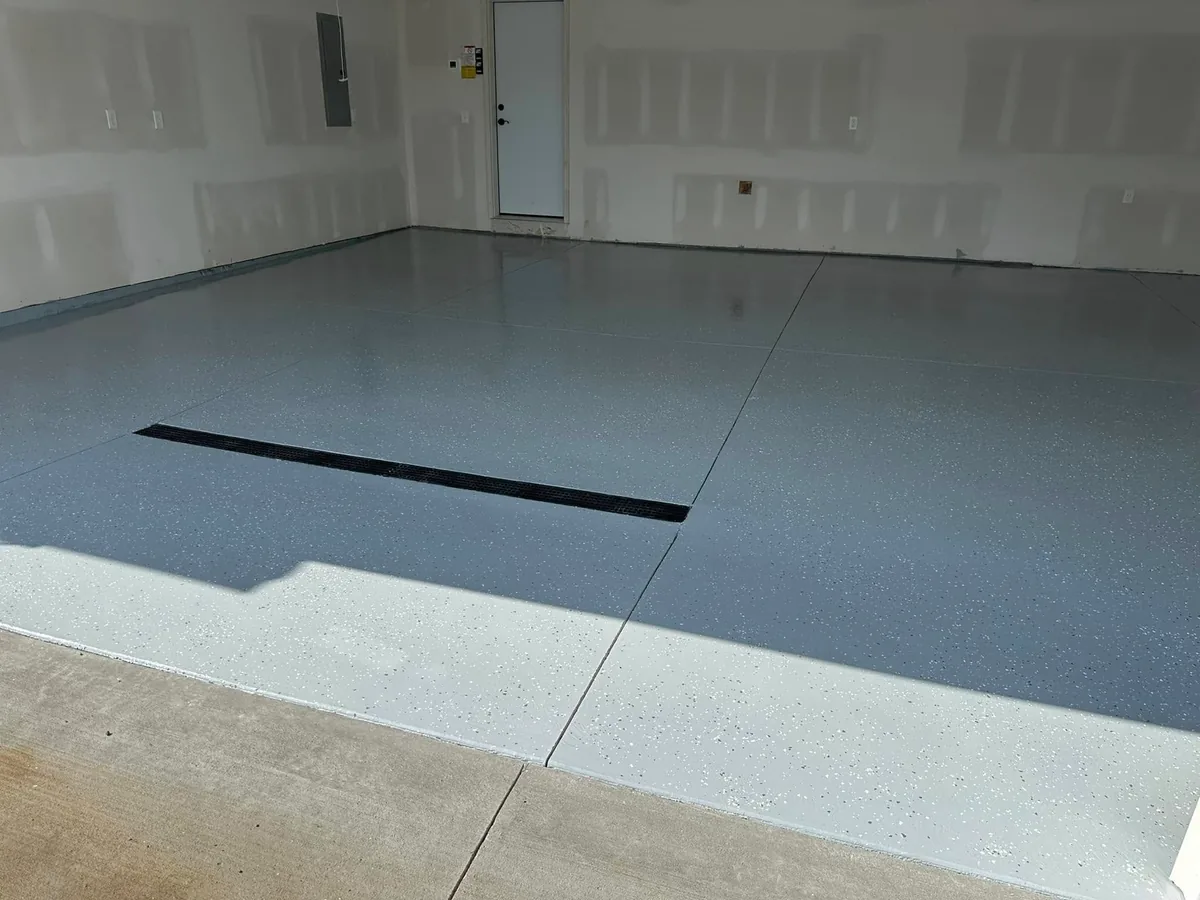
Epoxy floor coatings in solid color, flake, metallic and quartz finishes for homes and businesses. Every slab is diamond ground and moisture tested, and a UV-stable polyaspartic topcoat seals the floor.
Learn More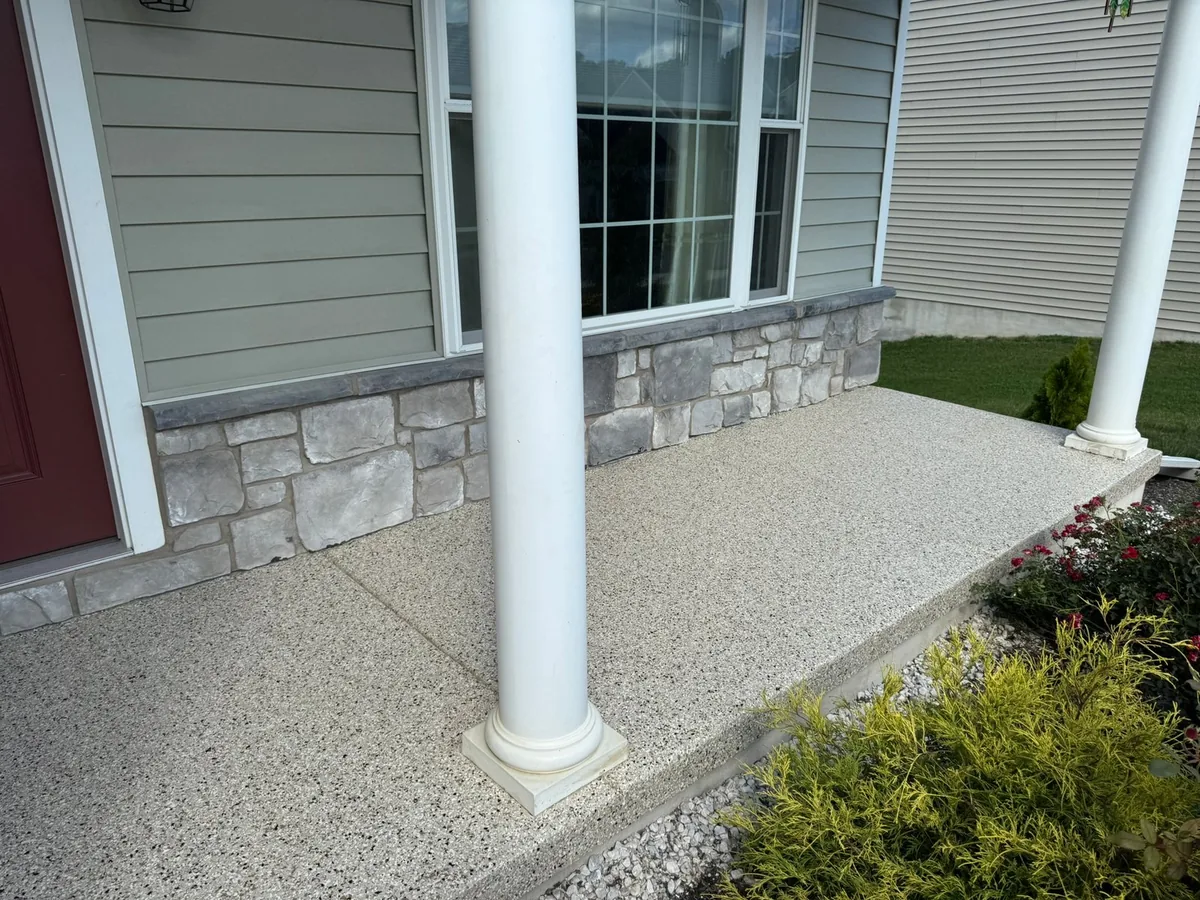
UV-stable flake and solid color coatings for patios, porches, pool decks and steps, with slip-resistant finishes for wet areas. Stain and seal and Rubber Stone are the other outdoor options.
Learn More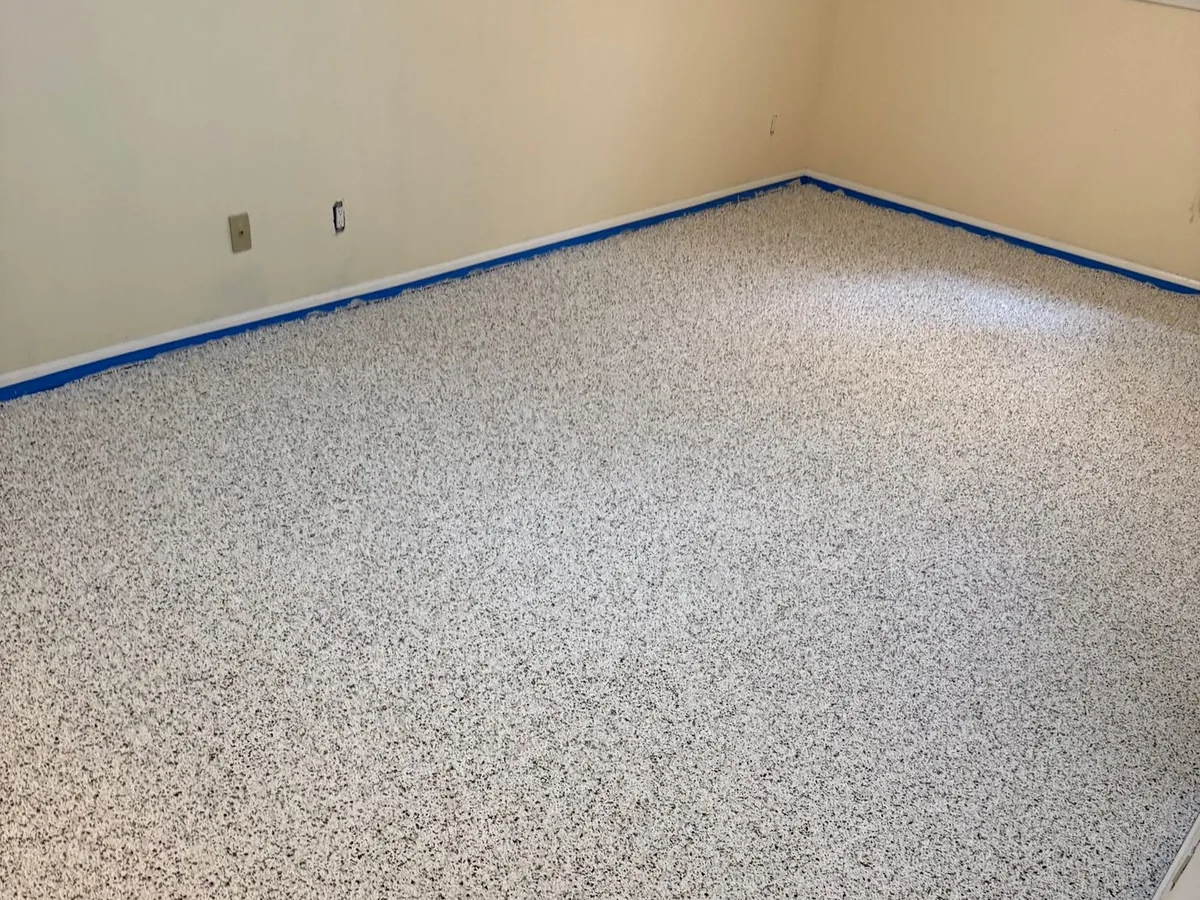
We coat basement floors in flake, solid color or metallic epoxy, and offer polished concrete and stain and seal. Every slab is diamond ground and tested for moisture before any coating goes down.
Learn MoreOur prep follows the standards a coating inspector checks for, because the company was founded by a former coating inspector.
Every slab we coat is diamond ground and tested for moisture first. Cracks and pits are repaired before any coating goes down.
About 75 days a year the temperature swings across freezing in the Twin Cities. Our polyaspartic and polyurea systems are chosen for that and for road salt.
Most garages are coated in one day. One Google review describes a three-stall garage done between 8 in the morning and 2 in the afternoon. Pick your look from two dozen flake blends.
Real reviews from real floor coating jobs, 34 reviews on Google.
Josh was amazing to work with. He personally called after I did the Facebook quote and scheduled an estimate for the next day. He got me on the schedule within 2 weeks. The crew arrived at 8am sharp, and were gone by 2pm doing my 3 stall garage. It’s been 2 months and it’s still the favorite update we’ve done to our house since buying. I can’t recommend Josh and Slab Labs enough for getting your garage floor upgraded.
We were so happy with the new garage floor coating Slab Lab did in our garage. Josh was very informative and helpful every step of the way. The workers, Rey and Alex, arrived on time, were very hard working, courteous, and very skilled in all aspects of the job. They were all so pleasant and easy to work with. The floor is beautiful—no more ugly salt damaged concrete! Thanks, Slab Lab!
Highly recommend. I’ve had the floor in my garage for about a year, and it still looks brand new. If I move, I’ll be calling them again for the next garage.
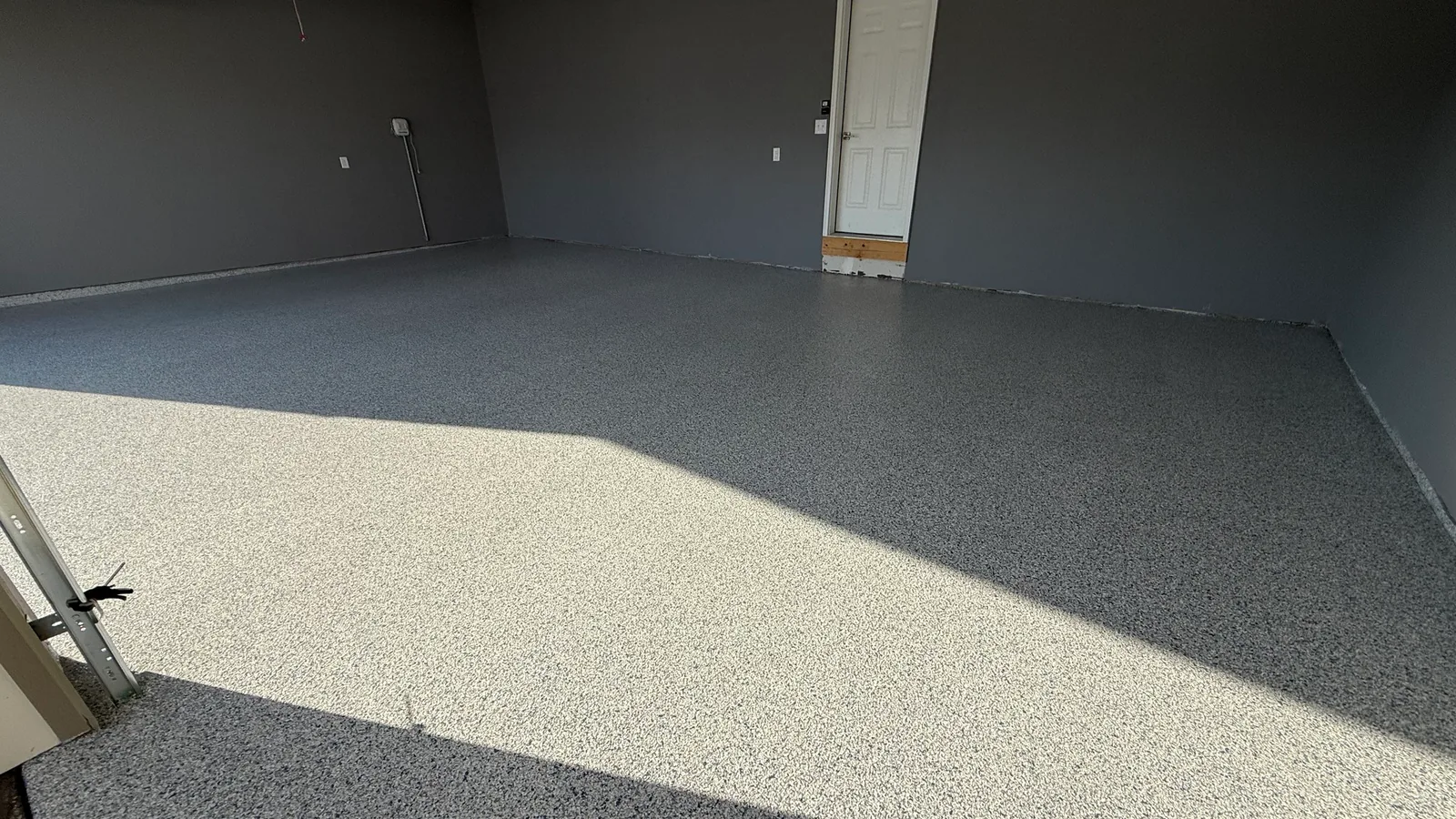
Epoxy vs polyaspartic vs polyurea for Minnesota garage floors: cure time, UV, flexibility, cold-weather limits and market cost ranges, side by side.
Read more →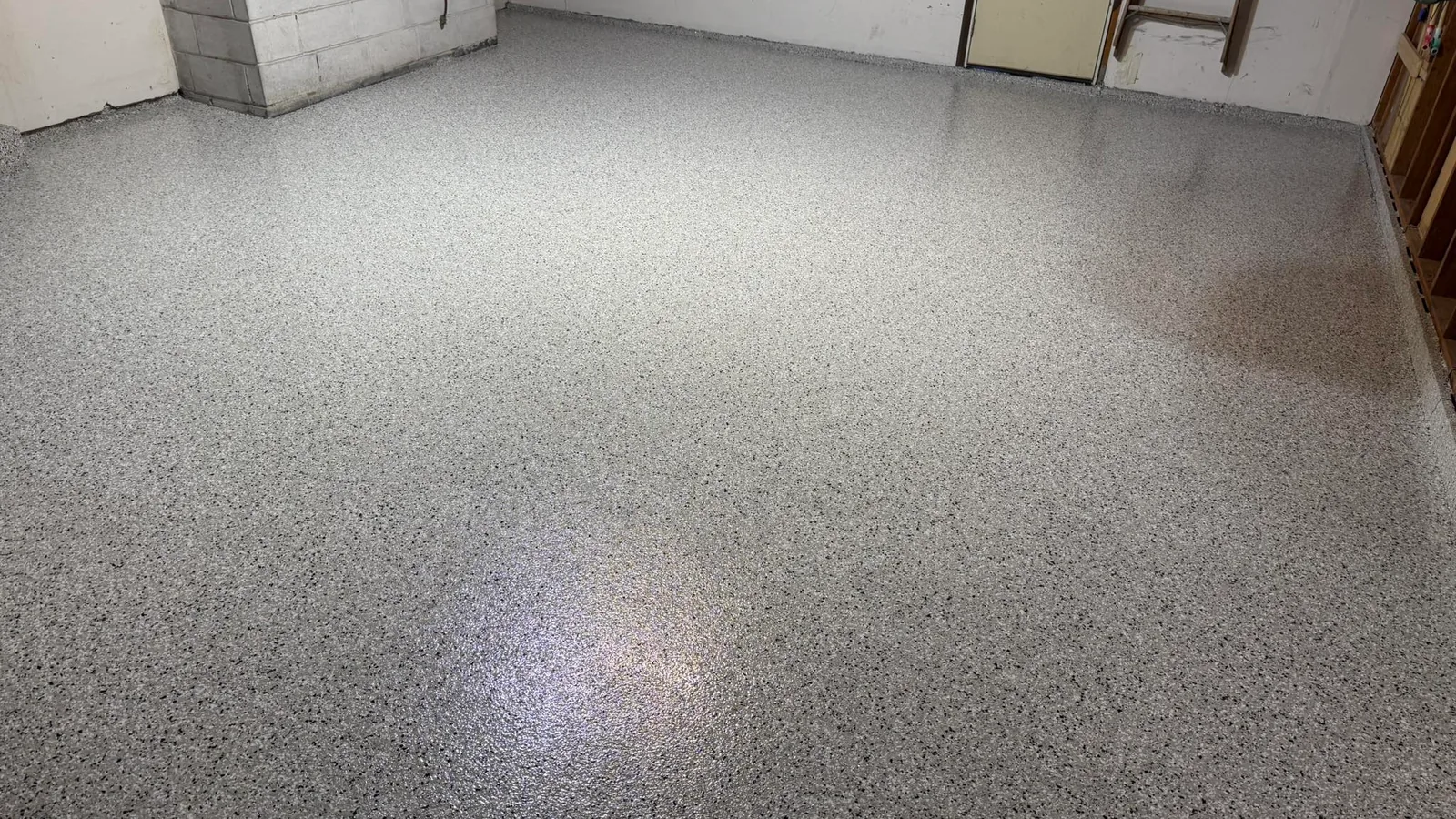
Garage floor coating cost in Minnesota: national and Minneapolis market ranges per square foot, two- and three-stall totals and what salt damage adds.
Read more →Send a few details about your floor, and we will set up a free on-site estimate. If you would rather talk, call or text (612) 702-9724.
Tell us about the floor. We come out, look at the slab and give you a free estimate.