Why do Minnetonka garage floors pit and flake?
Minnetonka's plows cover more than 350 miles of city streets, sidewalks and trails, including more than 580 cul-de-sacs. Before a snowfall, the city pre-treats most major streets with an anti-icing solution. Its own snow page says bare pavement is not the goal: streets are cleared, then treated to melt the rest.
The city notes that salt and pre-treatment can leave a white residue on the street for several days. Hennepin County treats roads like Minnetonka Boulevard, most often with rock salt, and MnDOT handles I-394, I-494 and Highway 7. All of it rides home on your tires and drips onto the garage slab as salty slush.
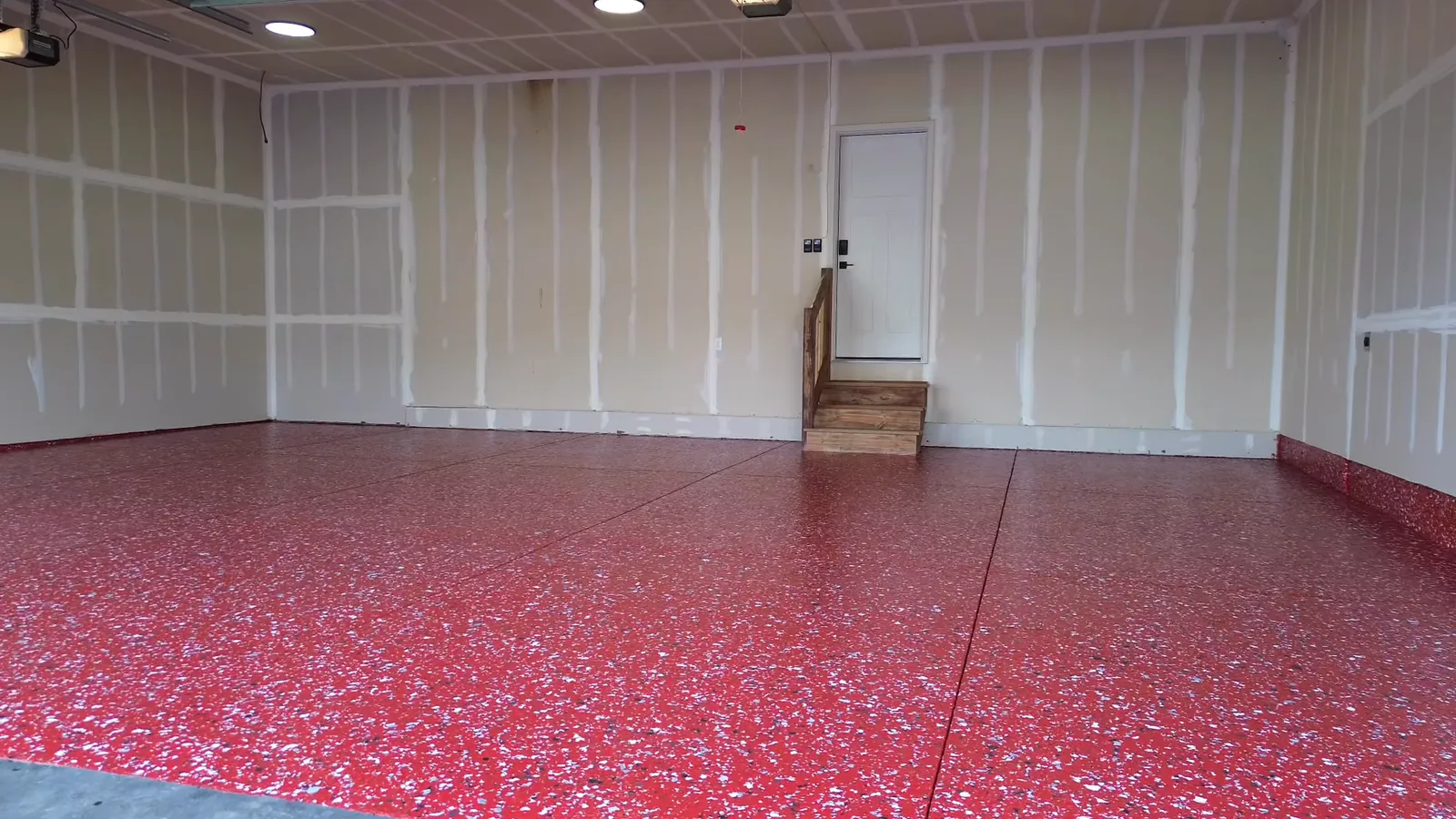
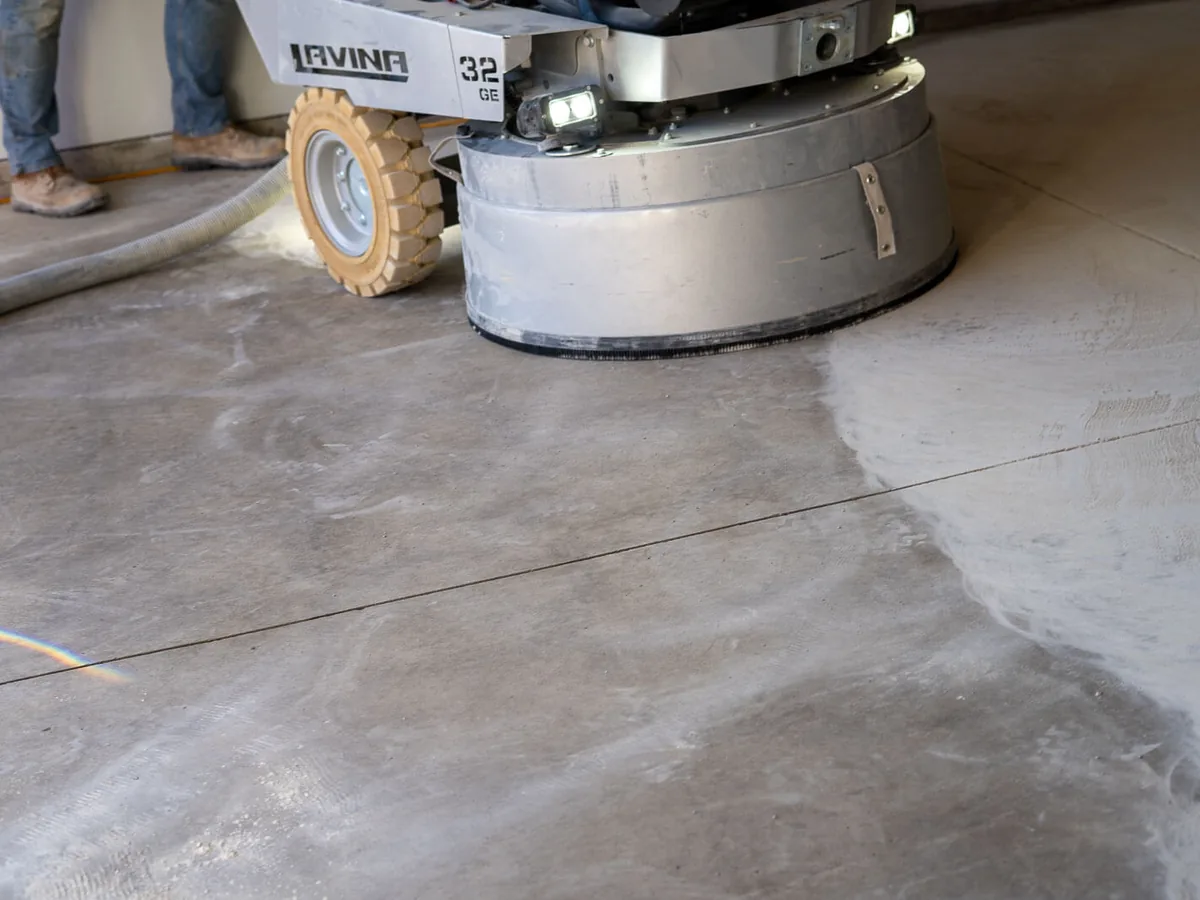
The concrete industry warns that deicers soak the surface and add freeze-thaw cycles, which makes scaling worse. In the Twin Cities, about 75 days a year the temperature swings across freezing. On an older slab, that shows up as pits, flaking and cracks. We grind the floor and do crack and pit repair before any coating goes down.
Garage floor coatings in Minnetonka's older homes
Minnetonka grew in stages. Oak Knoll, Groveland, Gray's Bay and Glen Lake started in the 1930s with modest homes on third- to half-acre lots. Bigger subdivisions such as Somerset Knolls and Temple Village went up along Highway 7 in the 1960s. Census data put the median year built for all Minnetonka homes at 1980.
Census figures also show about seven in ten Minnetonka homeowners keep two or more vehicles. That is a lot of winter slush on one garage slab.
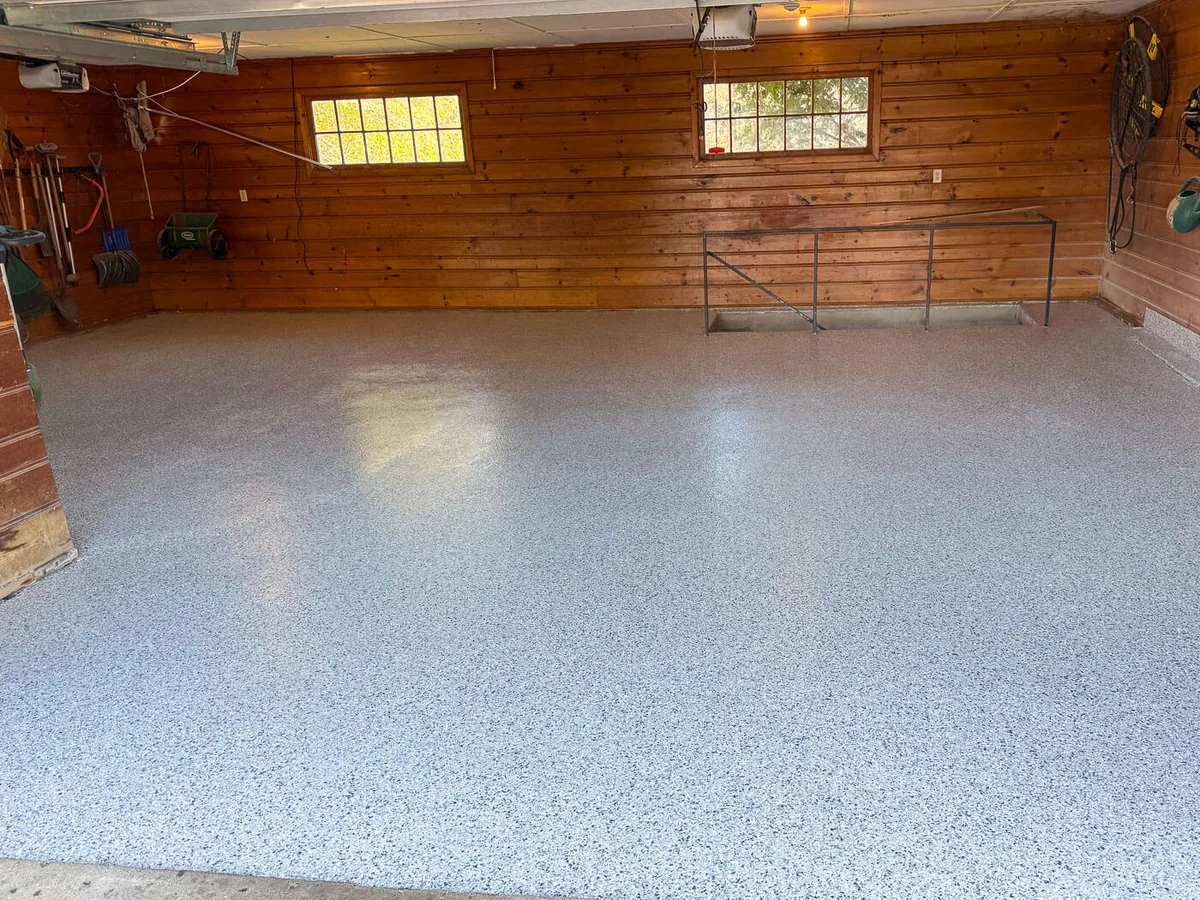
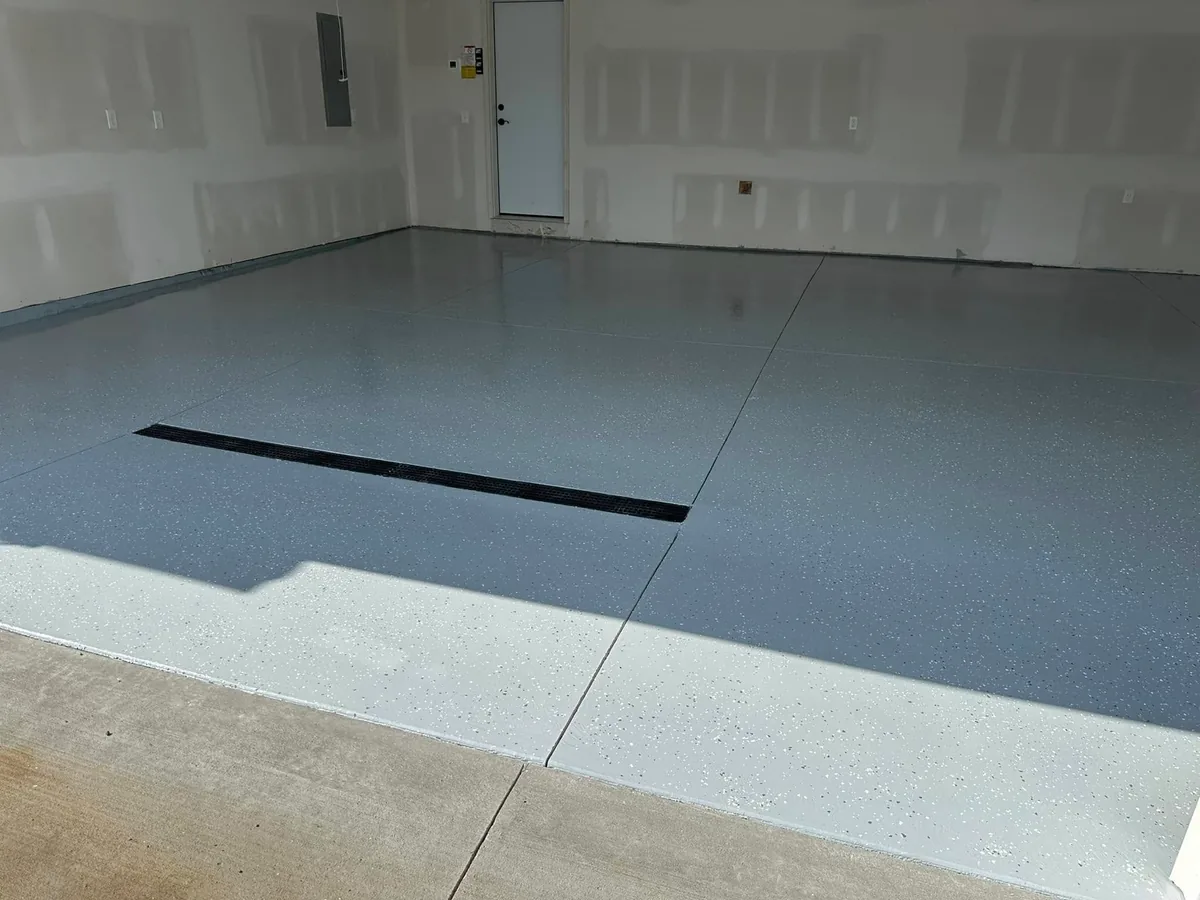
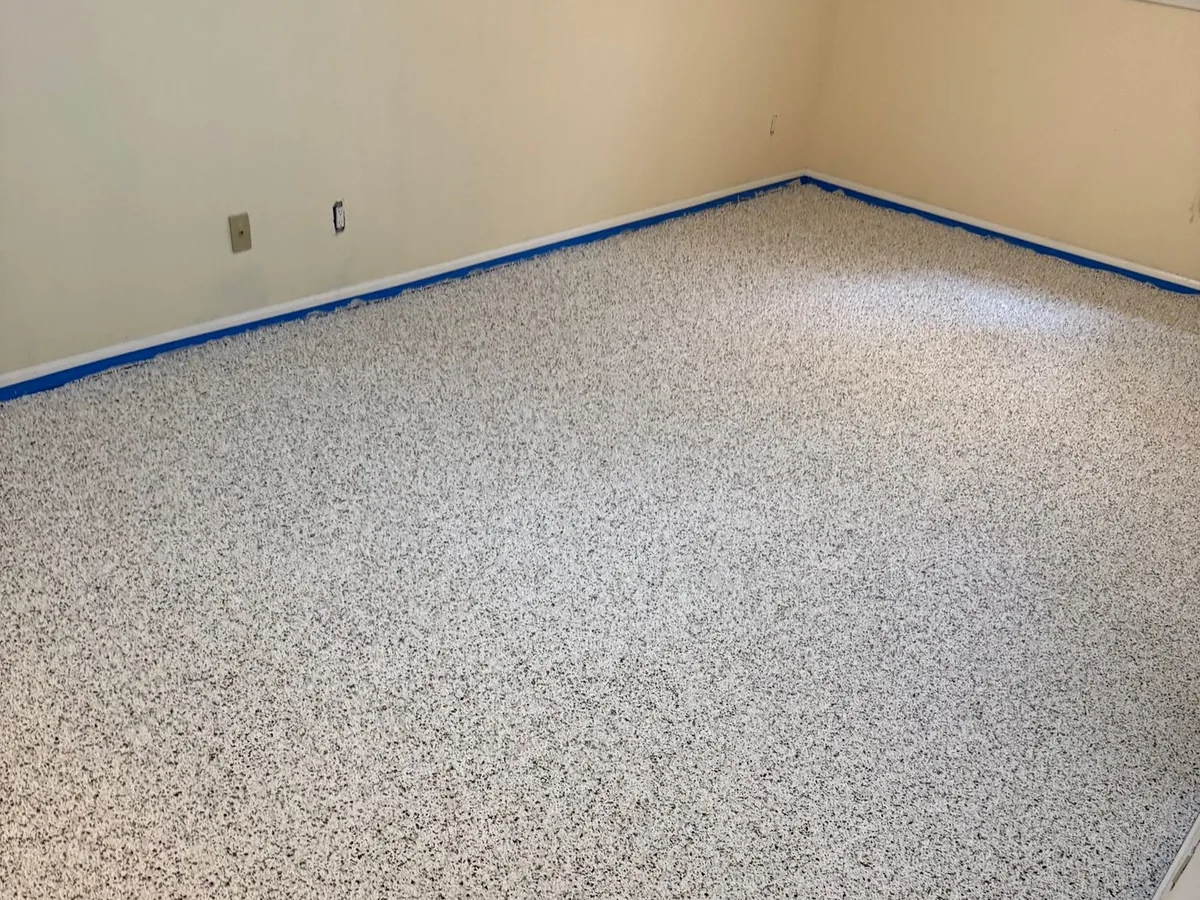
Our system starts with diamond grinding and a moisture check, then crack and pit repair. Next comes an epoxy or polyaspartic base coat, full flake, a scrape and a UV-stable polyaspartic topcoat. The topcoat hardens in 6 to 8 hours, and you pick from two dozen flake color blends. Slab Lab was founded by a former coating inspector, and every floor gets inspector-level surface prep.
Basement floors in older Minnetonka homes
The city's housing plan says aging homes here will need repairs and updates to stay in good shape. In a basement, the floor is a good place to start. A bare slab can be dusty, and it can smell musty in August.
University of Minnesota Extension explains that moisture vapor moves up through basement floors from the wetter ground. In humid summers, it adds, warm air condenses on cool basement floors. That is why we grind and moisture test every basement slab before a coating goes down.
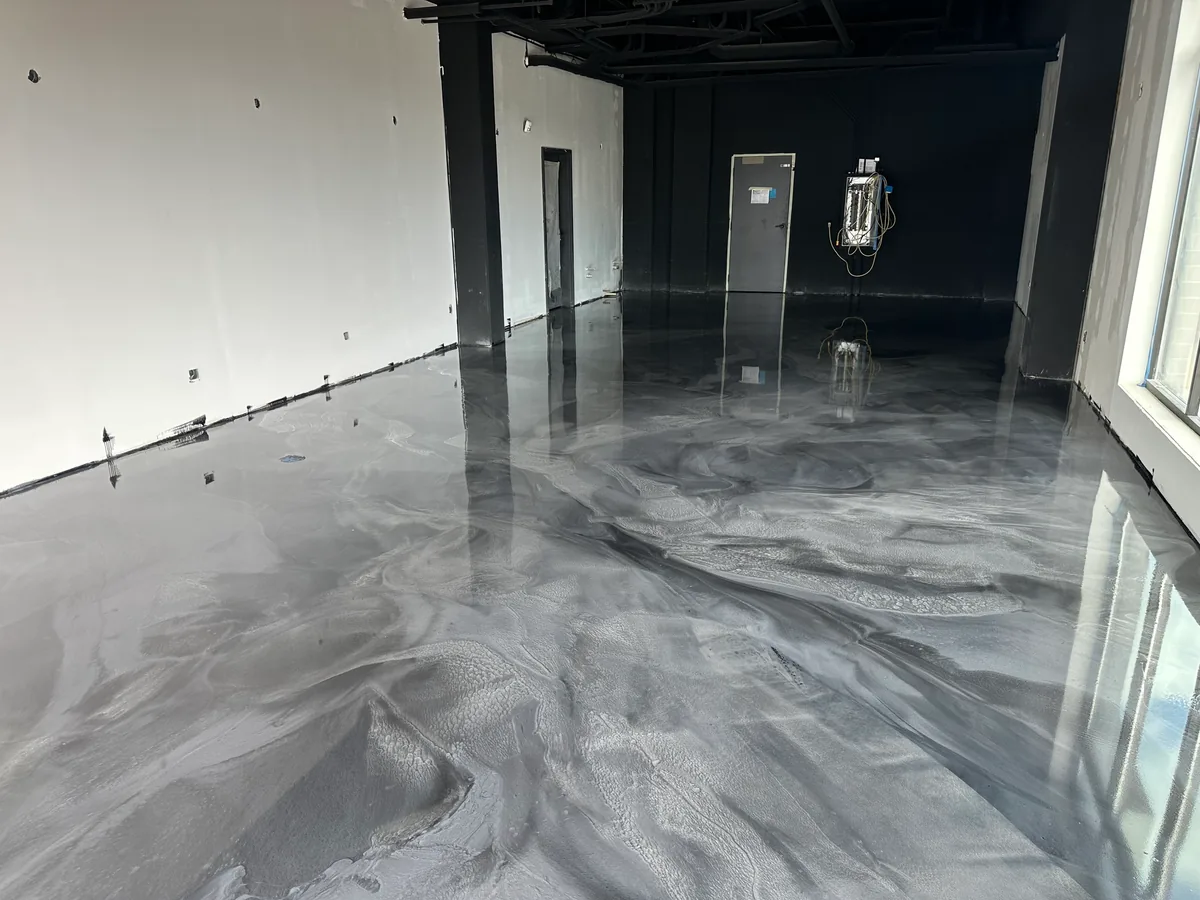
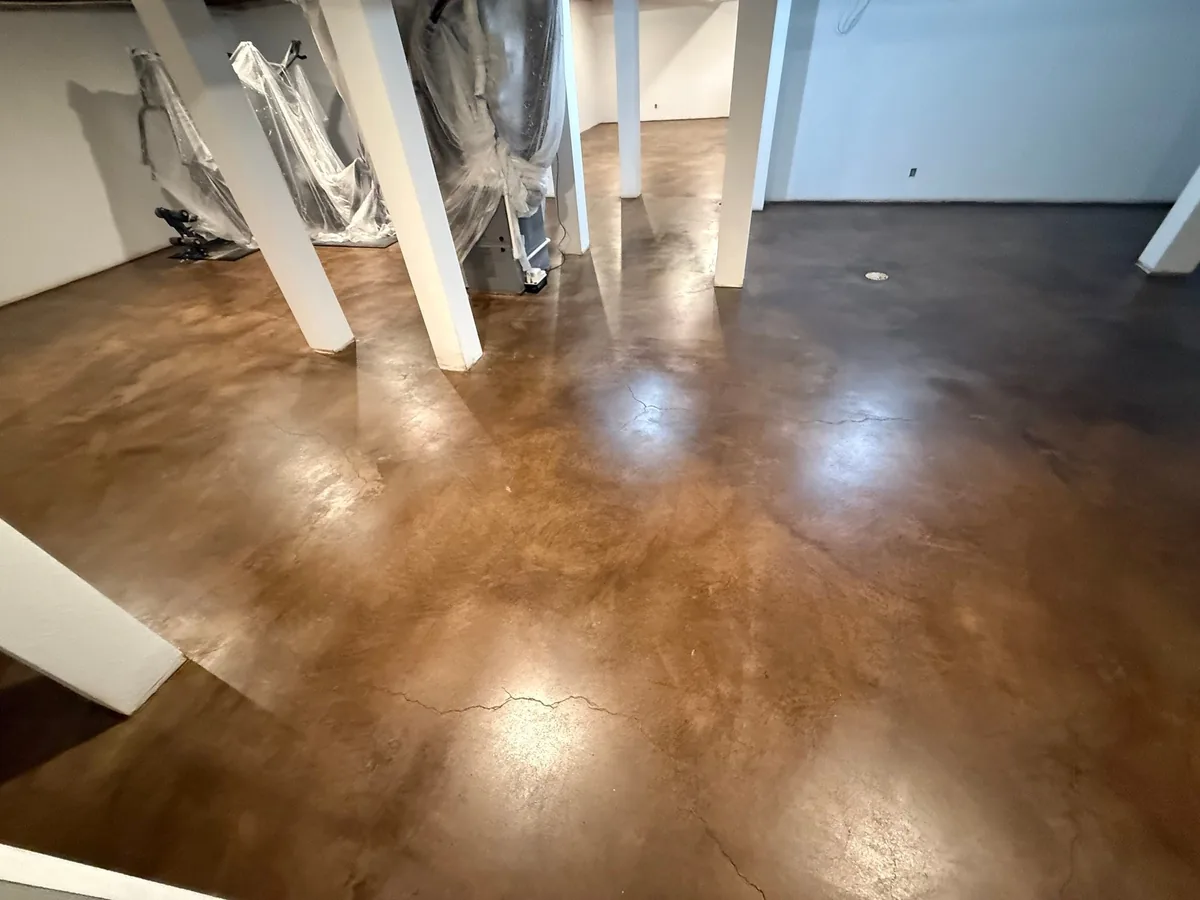
Our basement floor coatings include flake, solid color, metallic and stain and seal systems. When the test calls for it, the system starts with a moisture-resistant primer. They suit family rooms, home gyms, storage rooms and workshops.
Commercial floor coatings in Opus and along I-394
Minnetonka is a big job center, with about 48,000 jobs counted by the Metropolitan Council. The city's plan calls Opus its largest business area, about 640 acres in the southeast corner. Carlson Center sits along I-394, and offices and stores line the corridor around Ridgedale.
The plan says industry here has shifted from heavy manufacturing to lighter plants, warehouses and showrooms. It also calls Minnetonka a center for medical and highly technical manufacturing. The plan puts other light-industrial areas close to Highway 62 and I-494.
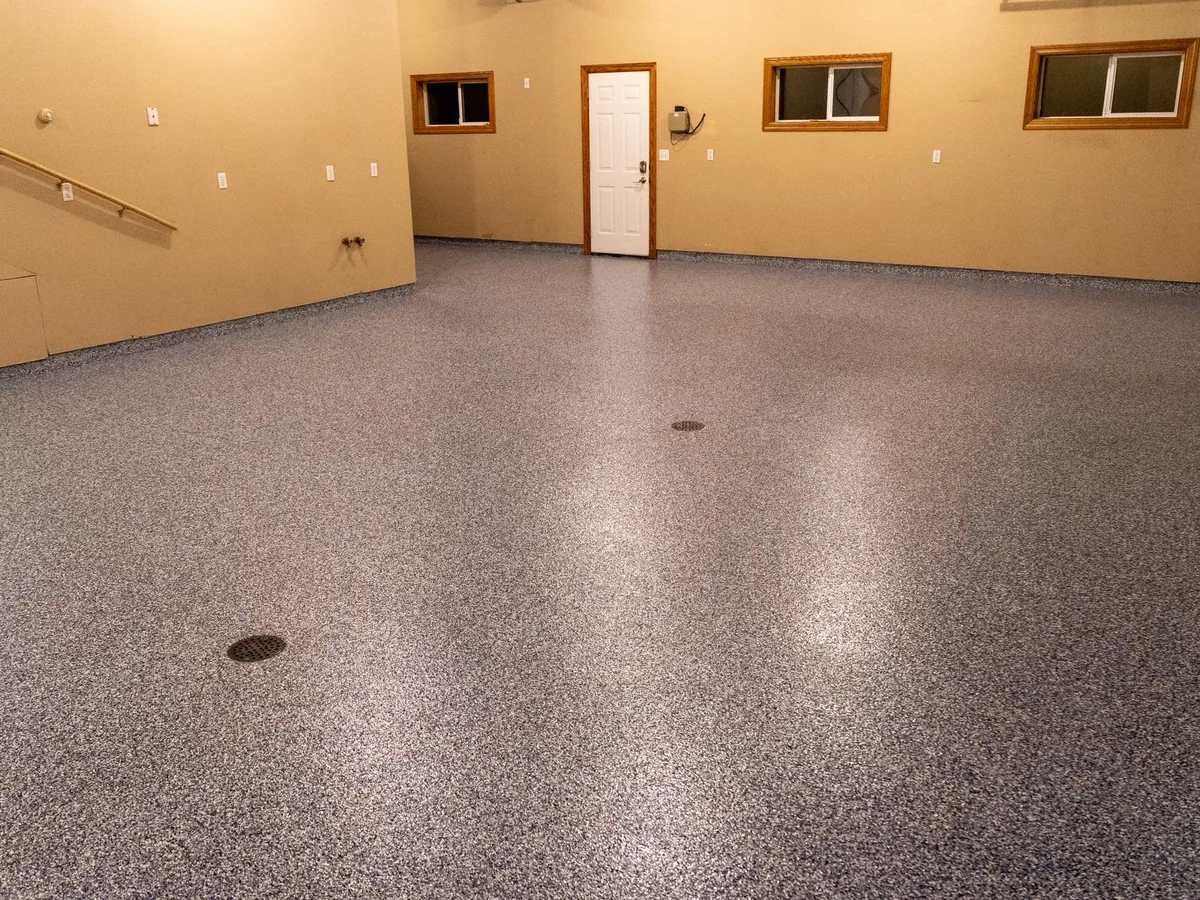
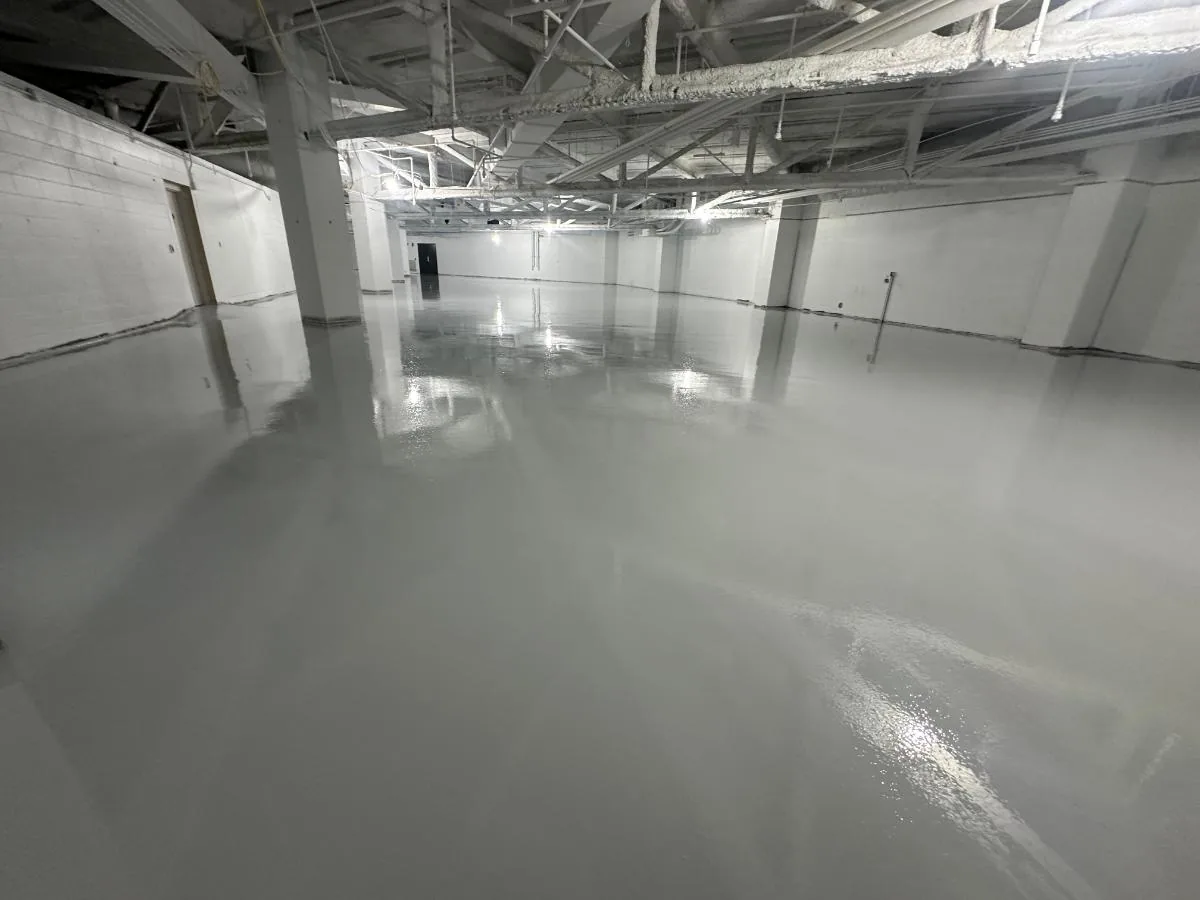
Those floors take forklift traffic, spills and wet boots from the parking lot. We install commercial and industrial floor coatings with slip-resistant quartz or textured topcoats. We plan the work around your operation. For an office or showroom that wants bare concrete with a shine, polished concrete is the other option.
Communities and areas we serve around Minnetonka: Minnetonka Mills, Glen Lake, Groveland, Oak Knoll, Gray's Bay, Somerset Knolls, Tonkawood Croft, Ridgedale, Opus, Shady Oak, Carlson Center, Wayzata.
Minnetonka ZIP codes served: 55305, 55343, 55345, 55391.