Garage floor coatings for Coon Rapids homes from the 1970s, 80s and 90s
Coon Rapids became a village in October 1952 and a city in June 1959. Most of its homes went up in the 1970s, 80s and 90s. The 1980s were the busiest decade, with about 26 percent of today's homes. About 62 percent of homes are single-family detached, and about 75 percent are owner-occupied.
Every winter adds wear to a garage floor. In the Twin Cities, the air temperature swings across freezing on about 75 days a year. Concrete soaked with salty meltwater takes stress with each freeze, and the surface can flake and pit.
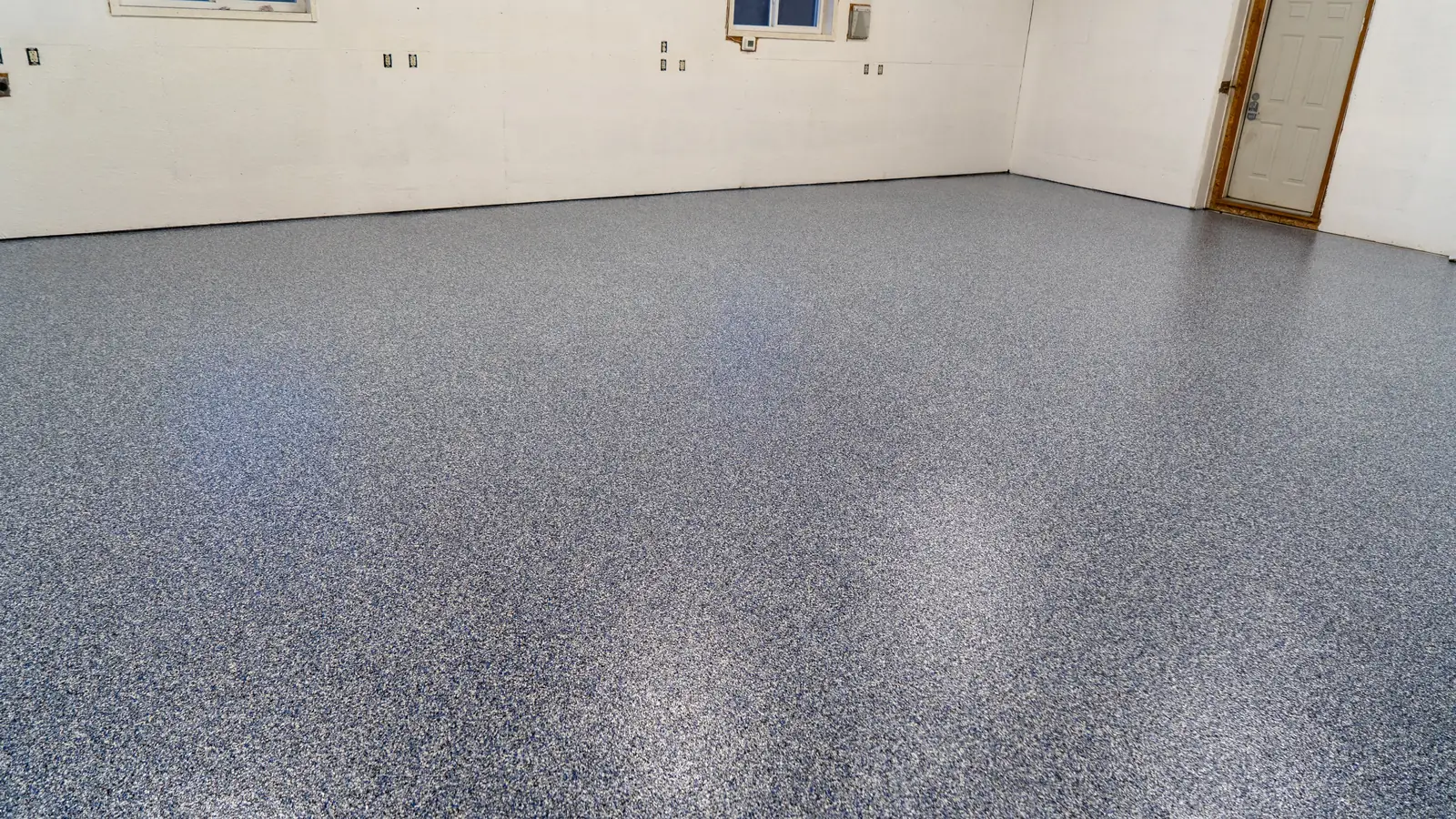
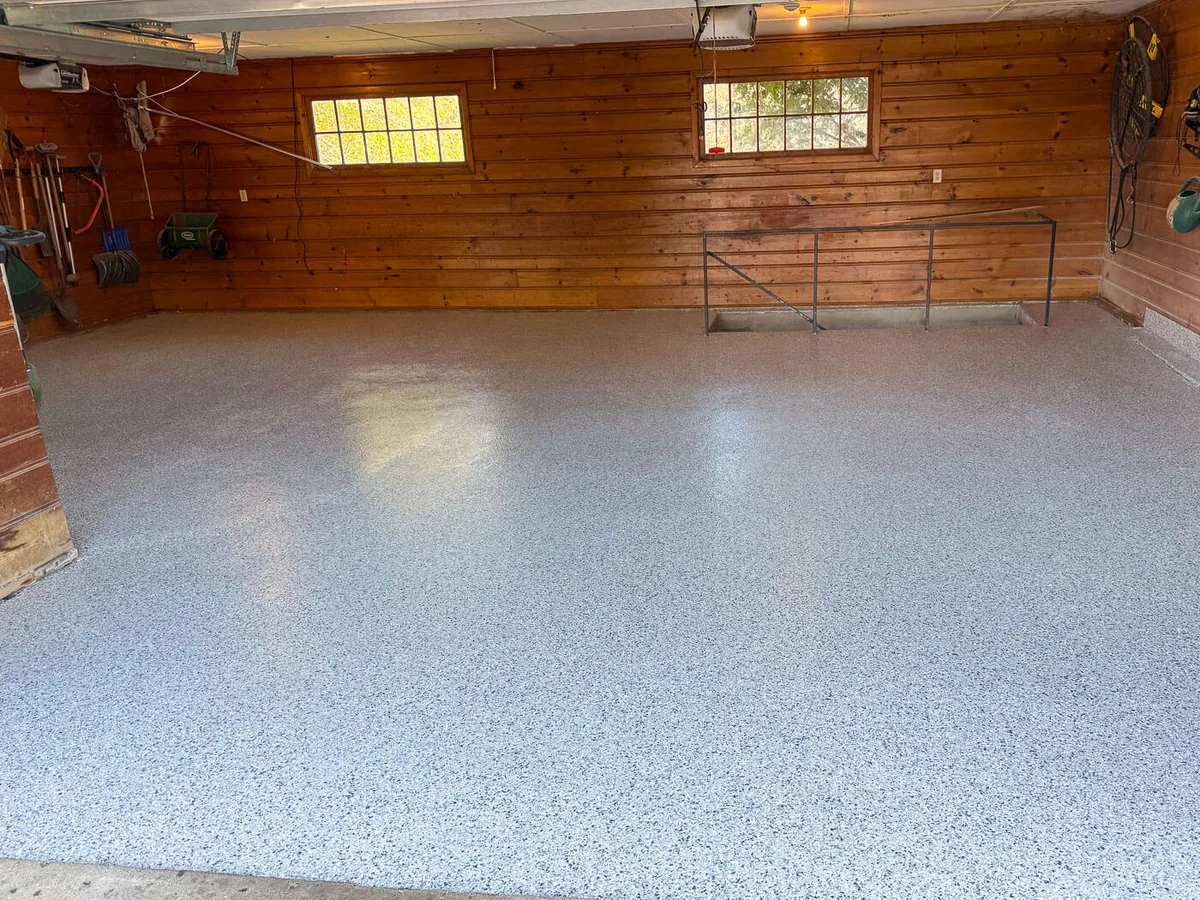
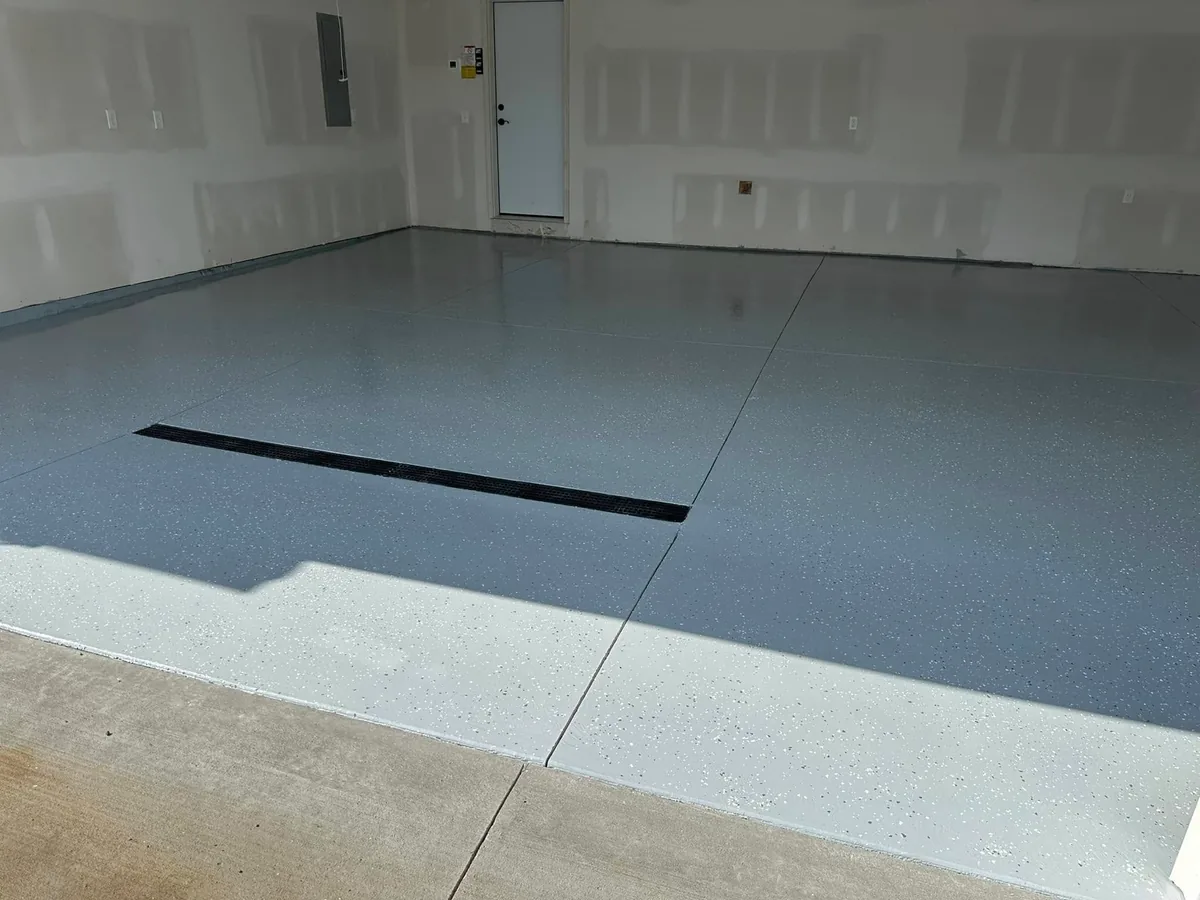
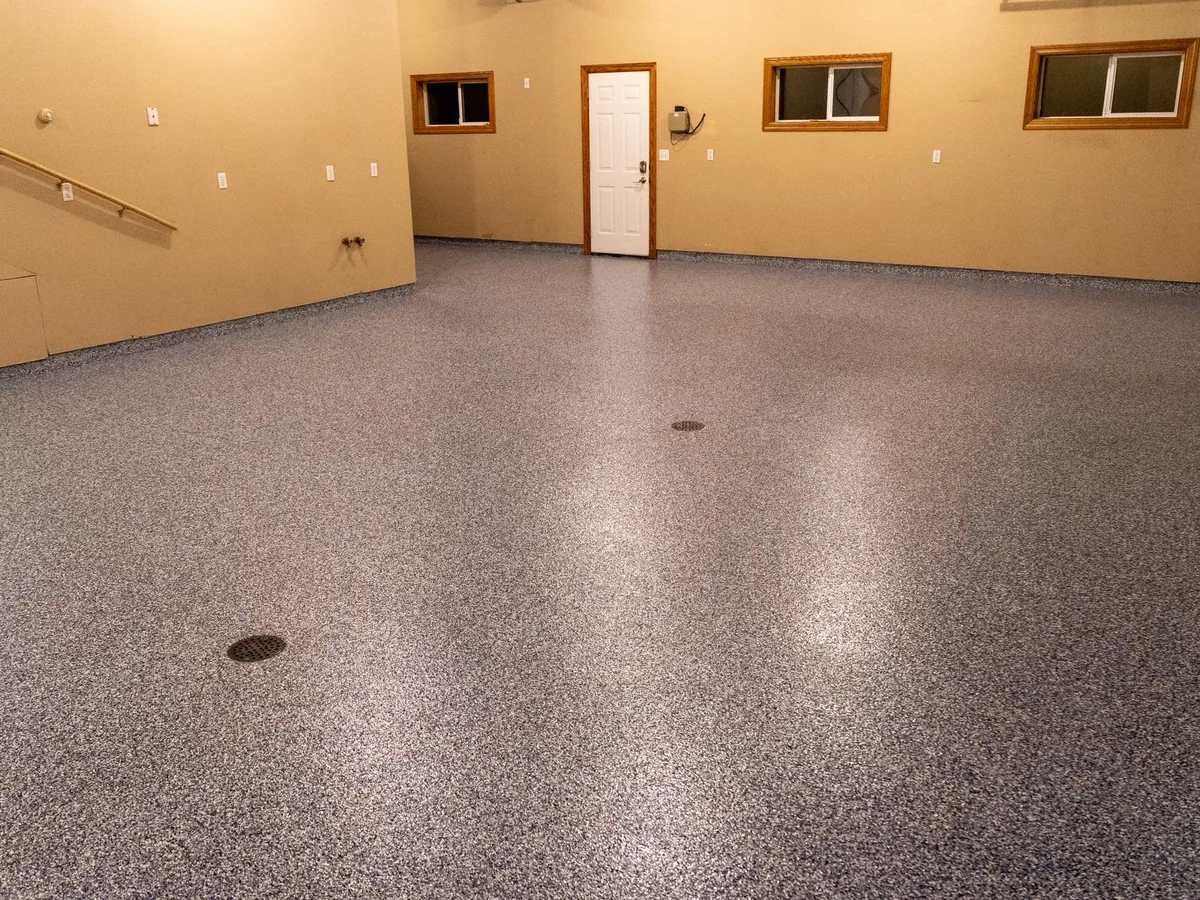
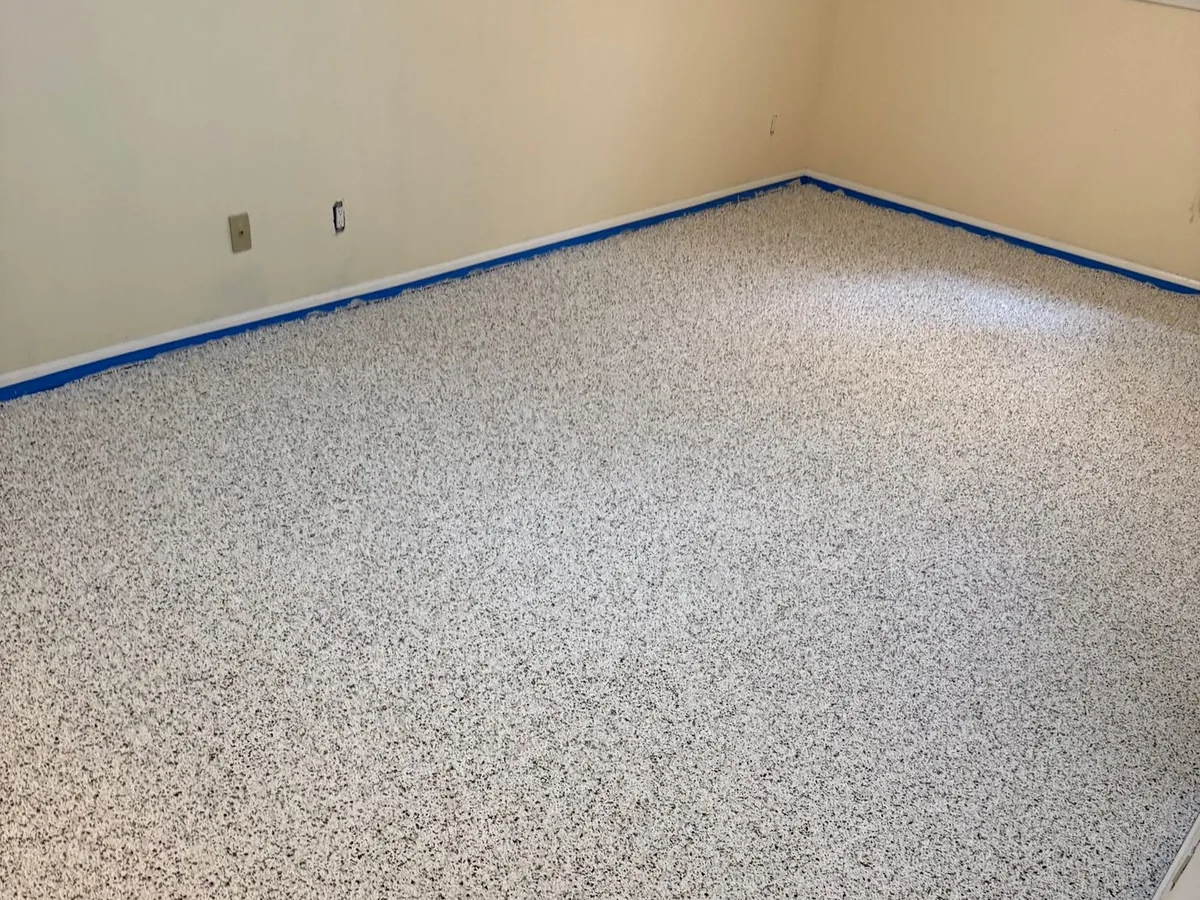
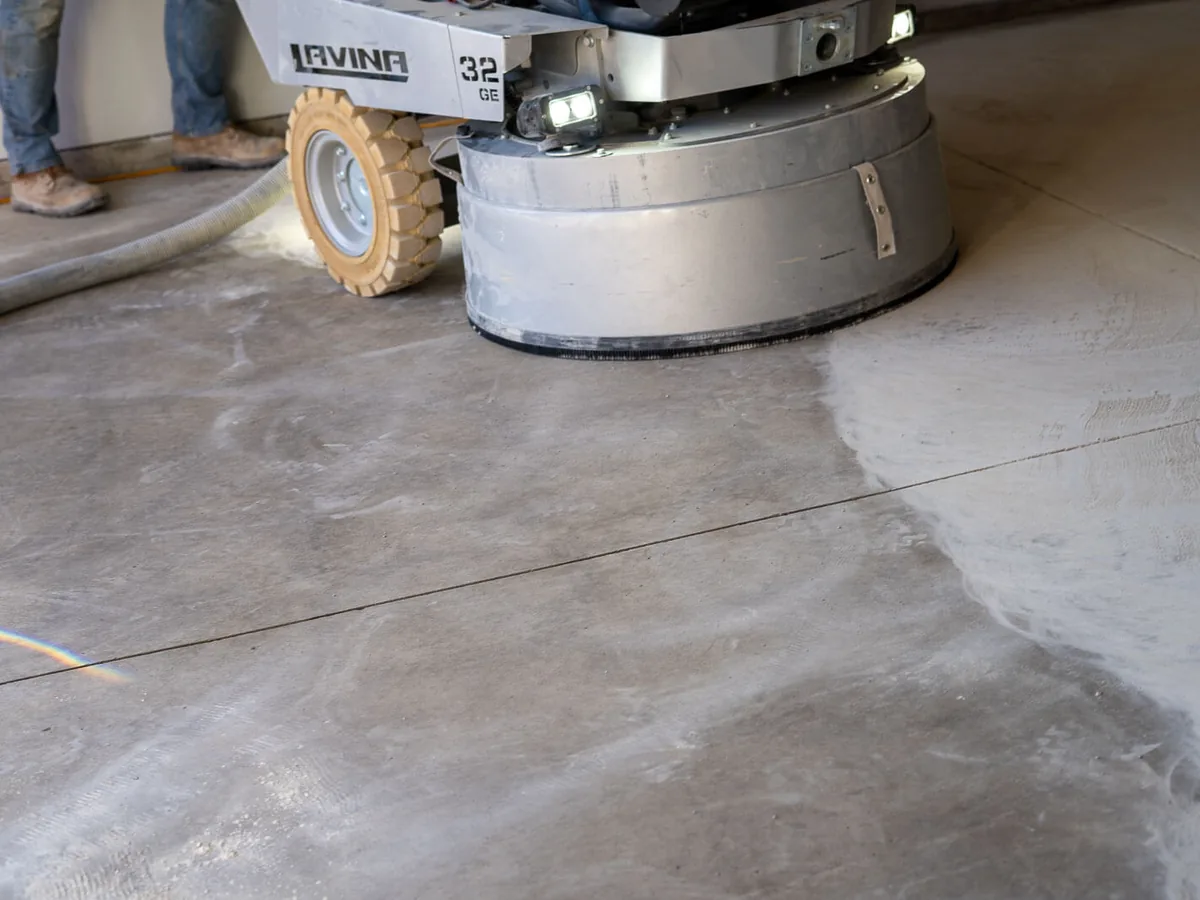
We prep every slab to the standards a coating inspector checks for. That means diamond grinding to sound concrete, a moisture test and the crack and pit repair the floor needs. Then come an epoxy or polyaspartic base coat, a full flake broadcast and a polyaspartic topcoat. Most garages are coated in one day, and our flake colors page shows all two dozen blends.
What does Coon Rapids road salt do to a garage floor?
After a snowfall of 3 inches or more, Coon Rapids crews plow over 400 lane miles of streets. The city spreads a salt mix on steep grades, busy intersections and curves when conditions turn hazardous. That mix is a cornstarch-based material combined with salt, and the city does not use sand.
Across the Twin Cities metro, the Minnesota Pollution Control Agency estimates 365,000 tons of road salt go down each year. From November 1 through April 1, Coon Rapids bans street parking from 2 a.m. to 6 a.m. So salty cars spend winter nights in garages and driveways.
That salt rides home as slush and melts onto the garage floor. Deicers keep the concrete surface wetter and add freeze-thaw cycles. The ready-mix concrete industry says moderate scaling can strip up to three-eighths of an inch of surface. One maker's resistance chart for a flake system scores 20 percent salt water, motor oil and gasoline as excellent.
Commercial floor coatings along Coon Rapids Boulevard and US-10
Coon Rapids Boulevard follows the old Red River Ox Cart Trail, and it remains an important commercial corridor. It runs from the Blaine border on the east to the Anoka border on the west. The city's 2040 plan groups new commercial and higher-density housing into mixed-use nodes along it, called PORTs. They are Port Evergreen, Port Riverwalk, Port Campus Square and Port Wellness.
Riverdale Village, an outdoor shopping center with over 75 stores, sits just off US-10. Highway 610 and Highway 47 are the city's other main routes. The city's 2014 report on its largest employers lists a hospital, the school district and an aerospace maker. A college and big retail stores make the list too.
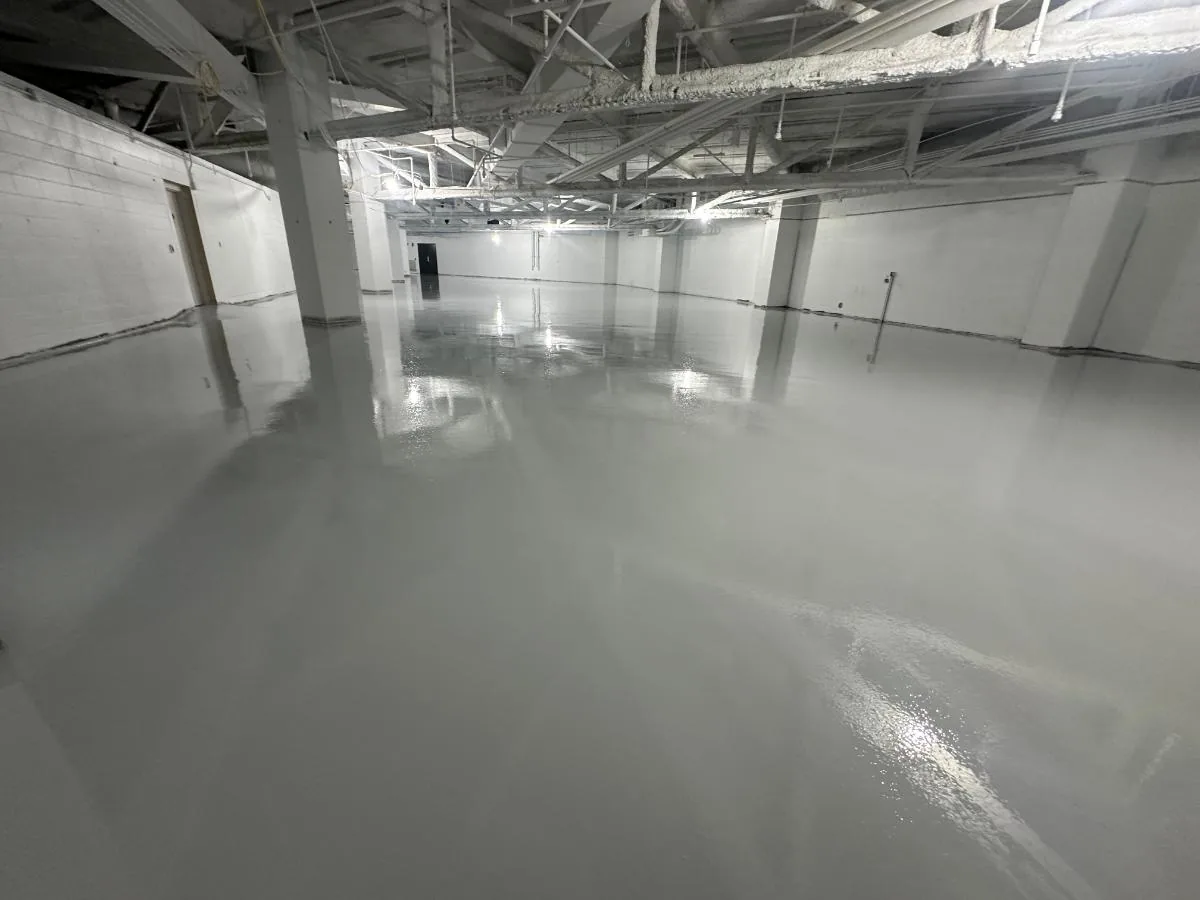
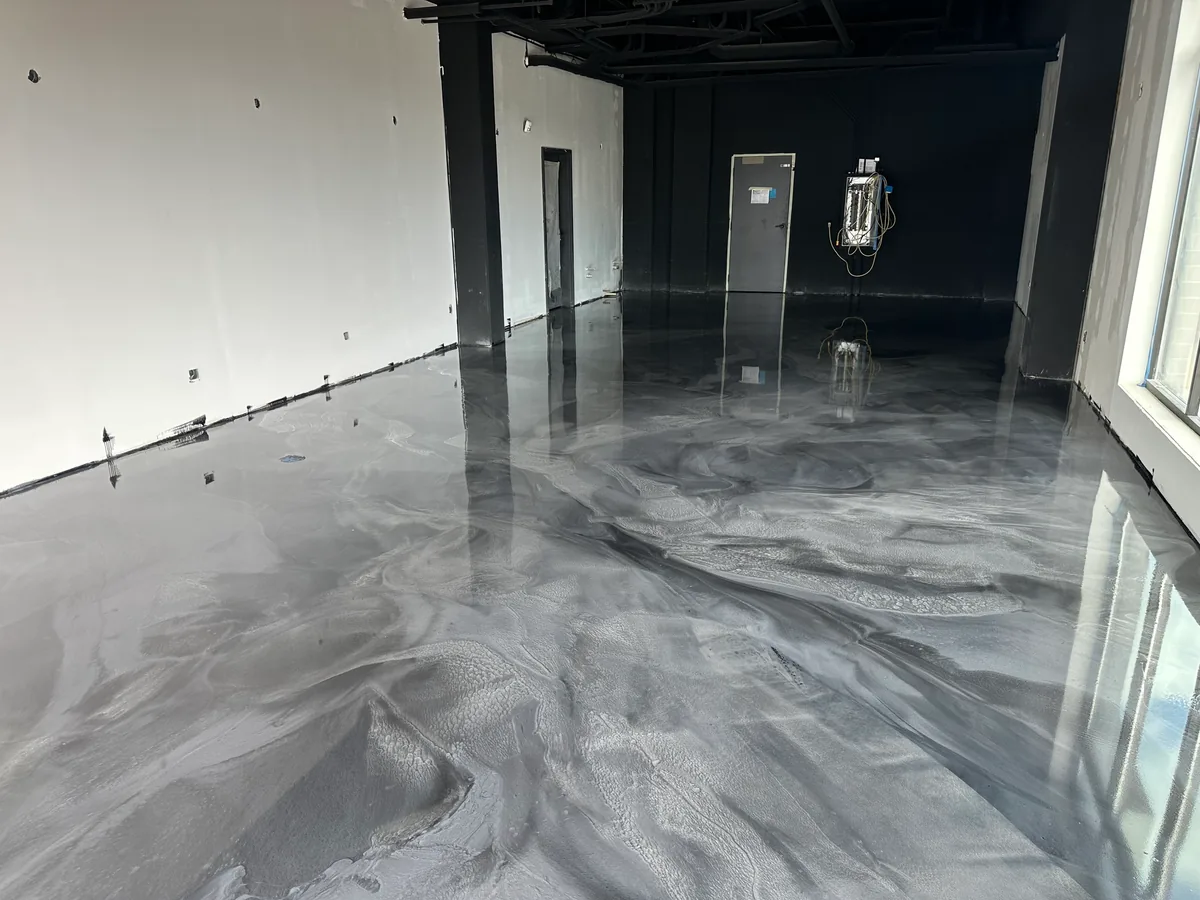
Retail stores, offices, shops and warehouses all take salt and slush from winter boots and tires. Our commercial and industrial floor coatings are chosen for chemical resistance, with quartz or textured topcoats where floors get wet. We plan the work around your operation. For a large open floor, polished concrete is another option.
Basement floors in Coon Rapids, and the drive from Otsego
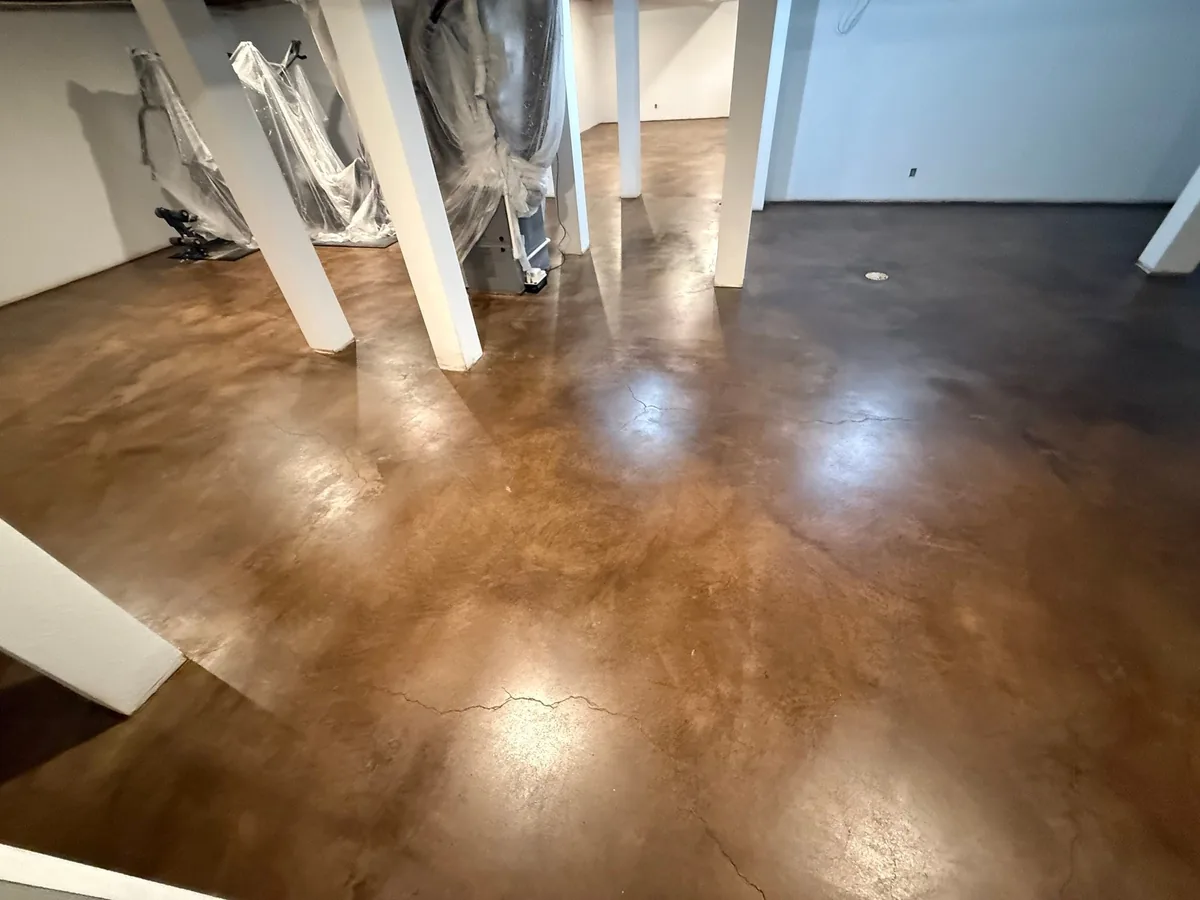
Coon Rapids sits on the Mississippi, across the river from Brooklyn Park. If your home has a basement, ground moisture can move up through the slab toward the drier room. So every basement floor coating starts with grinding and a moisture test. A moisture-resistant primer goes down when the slab calls for it.
A coated basement floor can serve a family room, a home gym, a storage room or a workshop. Flake and solid-color epoxy floor coatings, metallic floors and polished concrete are all options.
From our Otsego base, we take Highway 101 to US-10 and follow it into Coon Rapids. At the free estimate, we measure, check the slab and bring flake samples to view in your garage light.
Communities and areas we serve around Coon Rapids: Coon Rapids Boulevard, Riverdale Village area, US-10 corridor, Highway 610 corridor, Port Riverwalk, Port Campus Square, Pheasant Ridge, Woodcrest, Ponds of Shenandoah, Sand Creek Woods, Mississippi Shores, Bluffs of Coon Creek.
Coon Rapids ZIP codes served: 55433, 55448.