
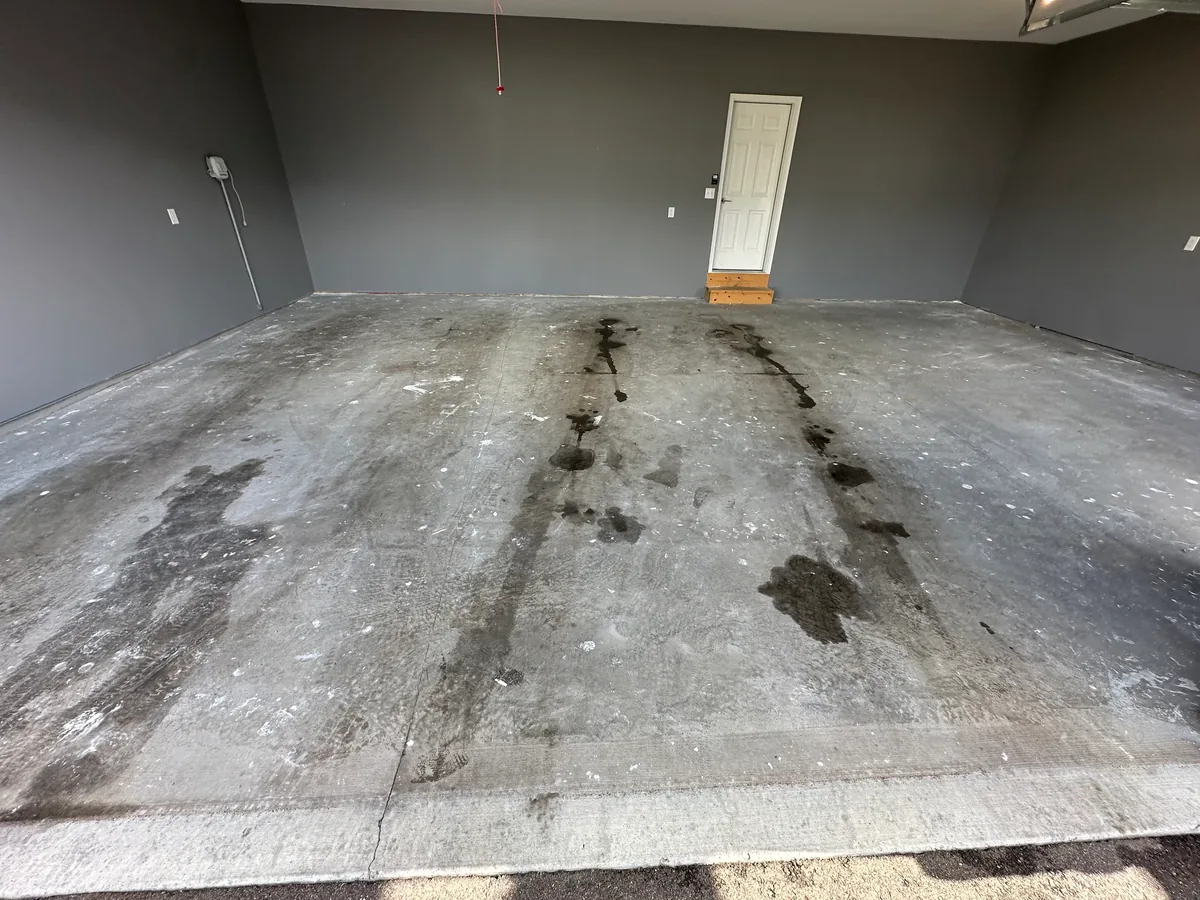
How Much Does It Cost to Seal a Garage Floor in Minnesota?
A national cost guide puts professional concrete cleaning and sealing at $1 to $3 per square foot. For a 360-square-foot garage floor, it lists $360 to $1,080. A second national guide says a pro garage floor seal averages about $750, from about $300 to over $1,100.
These are market numbers, not our price list. Your garage floor sealing cost depends on the floor size, the sealer, the prep and any repairs. Slab Lab Coatings offers garage floor sealing from our Otsego base, and your estimate is free and done on site.
What changes the cost of sealing a garage floor?
Start with the sealer type. A penetrating sealer soaks into the concrete and lines its pores. A film-forming sealer, such as an acrylic, dries as a thin layer on top. The first guide lists these installed prices:
| Sealer type | Market cost per sq ft, installed | Typical life (general guidance) |
|---|---|---|
| Penetrating sealer (siloxane or silicate) | $1 to $3 | 5 to 10 years |
| Acrylic sealer | $1 to $2 | 1 to 3 years |
| Polyurethane sealer | $1.25 to $3 | 5 to 15 years |
| Epoxy sealer | $4 to $10 | 5 to 15 years |
The life ranges come from the first guide, which groups epoxy and urethane sealers together. The penetrating range comes from the second guide, for silane and siloxane sealers.
The up-front price is only part of the math. An acrylic can cost the least to apply, but it lasts 1 to 3 years. Divide the price by the years a sealer lasts, and a longer-lasting sealer can cost less per year.
Film sealers also take more wear in a garage. A research review of concrete sealers says barrier coatings can fail early from abrasion under traffic. Size and coats matter too, since pros price by the square foot. The second guide calls two coats standard and says extra coats add cost.
Resealing is a cost to plan for. The second guide says concrete needs resealing every one to five years, depending on conditions and wear.
How much does prep add to the price?
A sealer only bonds to clean, dry concrete. The first guide says contractors must clean and dry the surface first so the sealant can bond. Its labor range of $0.70 to $1.25 per square foot covers basic cleaning and prep, not repairs. It also says old concrete must be completely dry before resealing, so we check moisture first.
Garages add oil to the mix, and that guide warns that oils can permanently stain concrete. It lists pressure washing at $0.35 to $0.75 per square foot. For older concrete, an expert in the second guide puts cleaning and prep at $1 to $1.75 per square foot. If your slab needs a deep clean, see our garage floor cleaning service.
An old sealer has to come off before a new one goes on. The second guide lists sealant removal at $1 to $3 per square foot, depending on the old product. We diamond grind old sealers and coatings off the slab when a floor needs it.
Cracks are the other add-on. The first guide says sealers will not fill cracks, so repairs cost extra. The same guide lists concrete resurfacing at $3 to $7 per square foot. A slab pitted by salt gets concrete repair and resurfacing before any sealer goes down.
Should you seal a garage floor yourself or hire a pro?
Doing it yourself costs less up front. The second guide puts a DIY garage floor seal at about $100, against about $750 for a pro. The first guide lists sealer at $30 to $80 a gallon. One gallon typically covers 200 to 500 square feet.
Labor makes up most of the gap. The second guide lists sealer materials at $0.10 to $0.75 per square foot. With labor, it lists $1.35 to $2.50 per square foot.
The trade-off is your time. That guide calls DIY sealing quite time-consuming, with a lot of prep work. Its garage how-to says to let the floor dry, ideally for 24 hours, before you start. We prep slabs with diamond grinders and dust extraction, which take off old sealers and stubborn surface grime.
What does a Minnesota winter add to the cost?
Salt is the big one. The Minnesota Pollution Control Agency estimates 365,000 tons of road salt are applied in the Twin Cities metro each year. Cars carry that salt in and leave it on garage slabs.
Salt makes freeze-thaw damage worse. A national concrete industry group says deicing chemicals raise the saturation of the concrete surface. Water expands as it forms ice, which stresses wet concrete. For outdoor slabs, that group advises a breathable silane or siloxane sealer.
A sealer helps, but it cannot promise to stop salt damage. In a MnROAD study, sealed pavement joints tested no different from untreated joints over two years. The concrete group also advises hosing off salt that cars leave on garage slabs when conditions permit.
Weather sets the calendar. The first guide favors spring or fall, when it stays 50 to 80 degrees for at least 24 hours. The second guide says anything below 50 degrees is usually too cold, unless the garage is heated and insulated. The concrete group calls late summer, after a few dry days, an ideal time to seal outdoor concrete.
Should you seal your garage floor or coat it?
Sealing costs less up front. The first guide calls epoxy and polyaspartic coatings the most durable for interior floors. They also cost up to three times more. For coating prices, see our garage floor coating cost guide.
A penetrating sealer can be enough for a sound slab with light use and a plain concrete look. If your garage takes salt slush and oil drips, a coating is usually the better choice. Our full-flake garage floor coating finishes with a polyaspartic topcoat, and most garages are coated in one day. For color in the concrete itself, see concrete staining and sealing.
How do you get a real price for sealing your garage floor?
A price you can plan around starts with a look at your slab. Slab Lab Coatings was founded by a former coating inspector, so prep gets as much attention as the sealer. Your estimate names the sealer, the cleaning, any old-sealer removal and the repairs your floor needs.
We are a Minnesota company based in Otsego, working across the Twin Cities metro. Learn more about our garage floor sealing service, or call or text (612) 702-9724 for a free on-site estimate.